Messing about with Morpholio Trace

I’m messing about with Morpholio trace. I signed up for the Henry Gao Morpholio online class. I need the structure of a class to get myself to do this, otherwise I will keep putting it off.

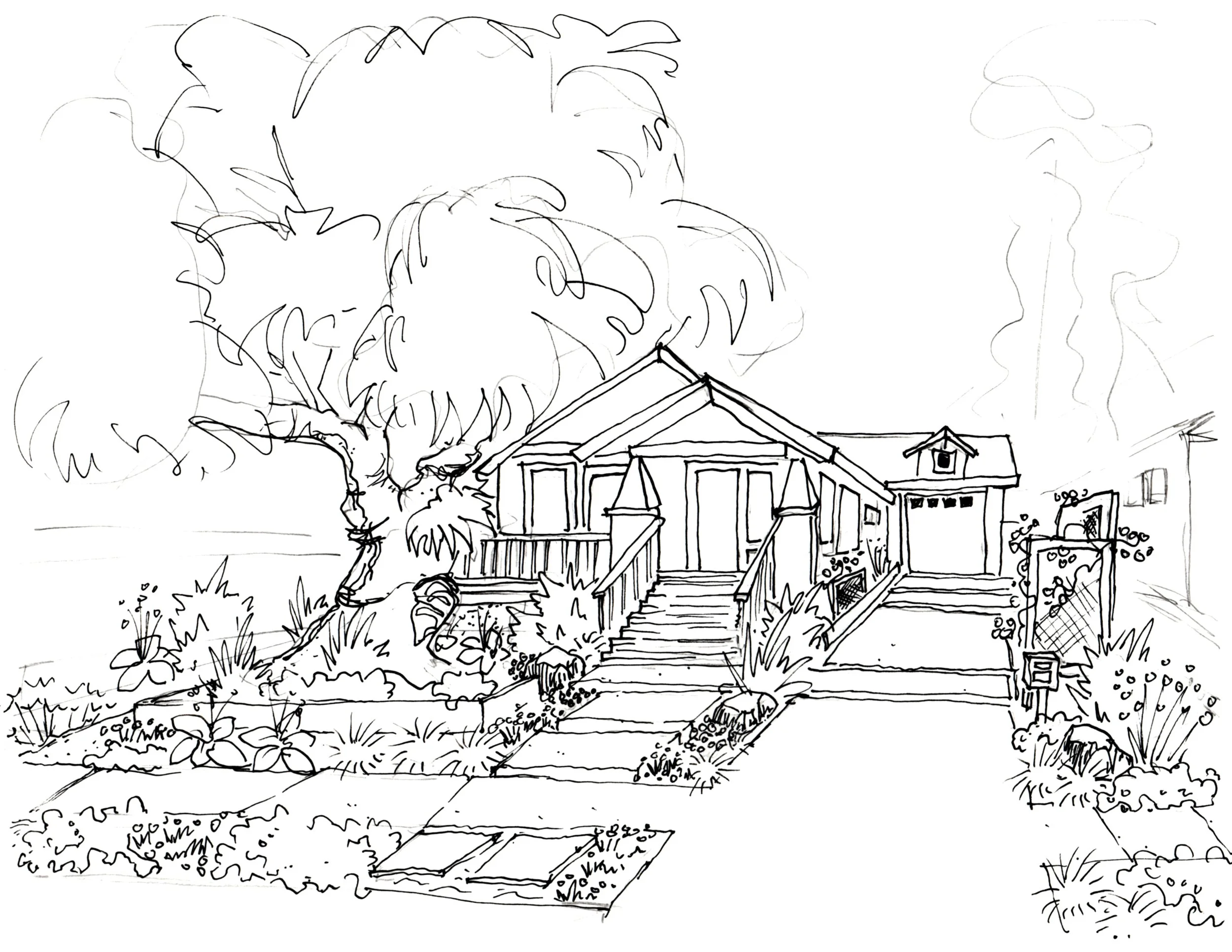
My current workflow for doing perspective drawings is cumbersome compared to what I am imaging it could be with Morpholio.

I don’t do a ton of modeling in Vectorworks. I do a very basic house model and a deck and stairs or a pergola, raised beds, etc. So in that case I rotate around, find a good view, export that as a PDF and print it out and then switch to analog sketching. I have a nice desktop light table in the Huion 23.5”. This was a game changer for me and I highly recommend getting one. I wont need one if I am using Morpholio but I use it for other things and I love it!

  1. If I have not created a model in Vectorworks I choose a photo from a site visit, use a google street view screenshot, OR even a photo from somewhere like realtor.com if the house has an old listing still active.

  2. I change the opacity and then print it out.

  3. Using a piece of printer paper I then trace it in pencil using my light table.

  4. Then I remove the print out, and trace the pencil drawing using a lightweight fineliner. I like the Derwent LINE MAKER pens. I usually use another piece of crappy printer paper for this. I often skip this step and go straight to step 5.

  5. I trace it again in pen on a piece of marker paper.

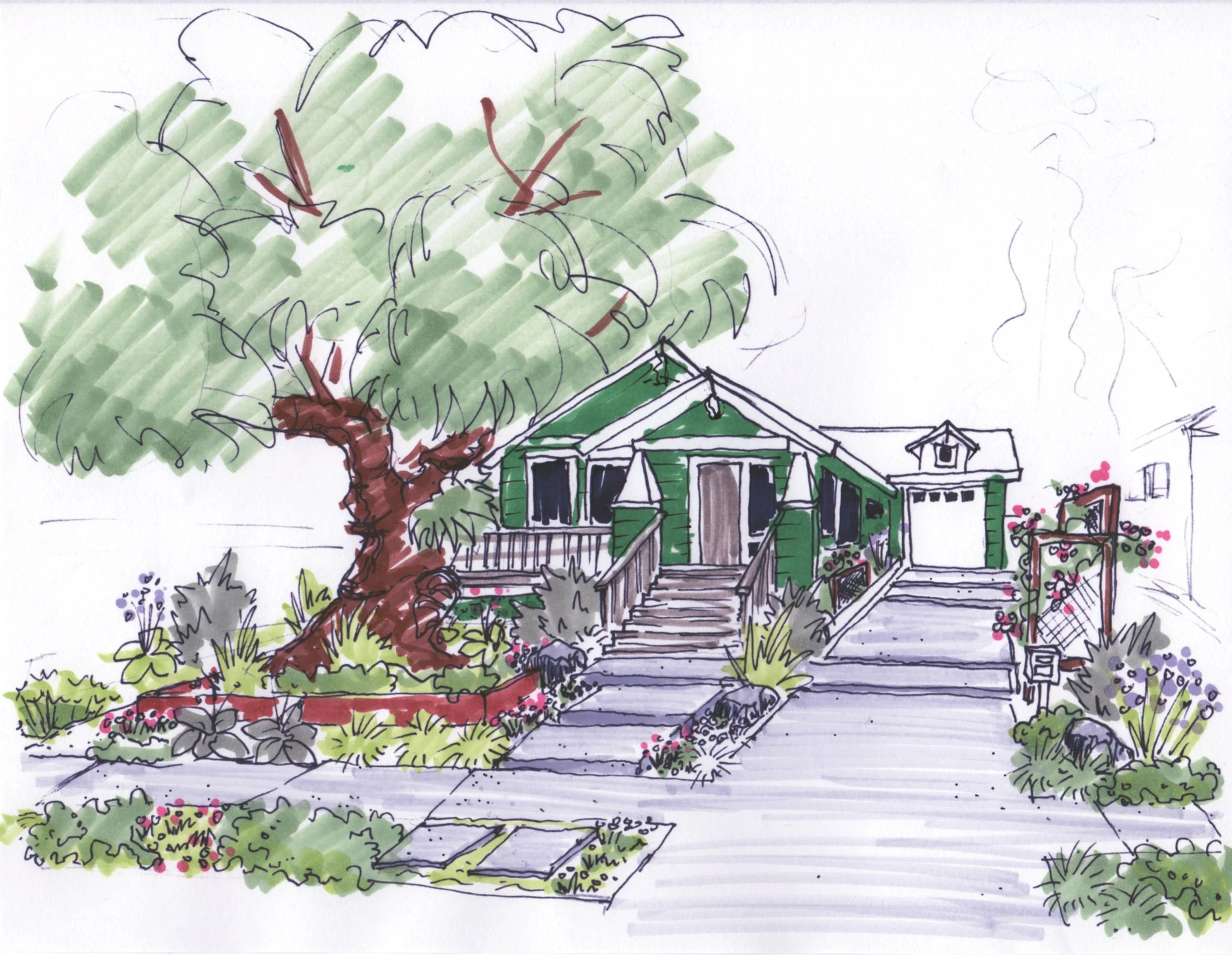
  6. Then, I color using AD markers. I learned coloring with markers using Chartpak. At some point I switched to Copic but now I have mostly switched BACK to Chartpak. Copic are alcohol based and I really find that they do not blend well. Chartpak are some other solvent, I’m not sure what, but I love the smell and they bland much better. I do have a zillion markers so I use a combo of Copic, Chartpak, and Tombow.

PHEW! As you can see, this is def. cumbersome! Gosh, get with the times, Laura!

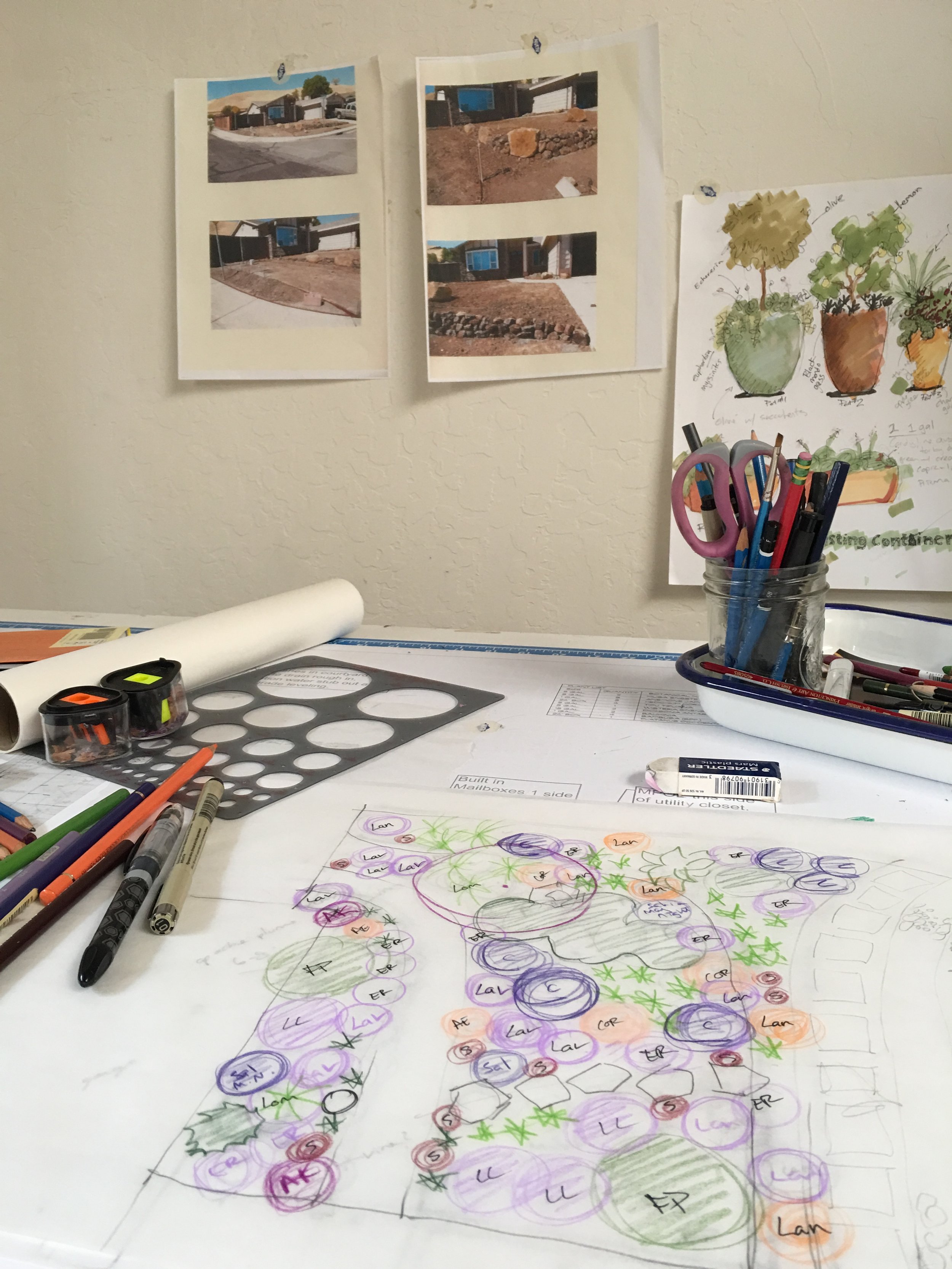
As you can see, this is pretty loose and looks like a coloring book. People do not necessarily want to pay me to spend a ton of time on this so I do it as quickly as I can and the result looks pretty amateurish. Many clients are not used to visualizing a perspective from a plan view drawing so even this is useful for them and this can really help sell your design! The coloring on this one is actually especially bad. I can tell I DID NOT use marker paper when I did the color layer. :O

This is an old project but I am going to use it for my 1st learning project in Morpholio.

Messing about with Easyscape

If you are a big Bay Area plant nerd you are probably familiar with the website Calscape that is part of the CNPS (California Native Plant Society). It is an invaluable resource for native plants in California. They tap in to the Jepson Herbarium* database which you can find here. They did recently update the website and add some new offerings to help people design well with native plants. You can find inspiration, example planting plans, and find certified native plant designers (including Wild Things Garden Design)!

At the most recent APLD International Design Conference in San Diego we were able to tour the home garden of Dennis Mudd the original creator of Calscape. It was a gorgeous garden! But he was also in the process of rolling out his new offering - Easyscape. This is an on the go design tool that helps you design your native garden based on native plants that are local to your area.

How it works:

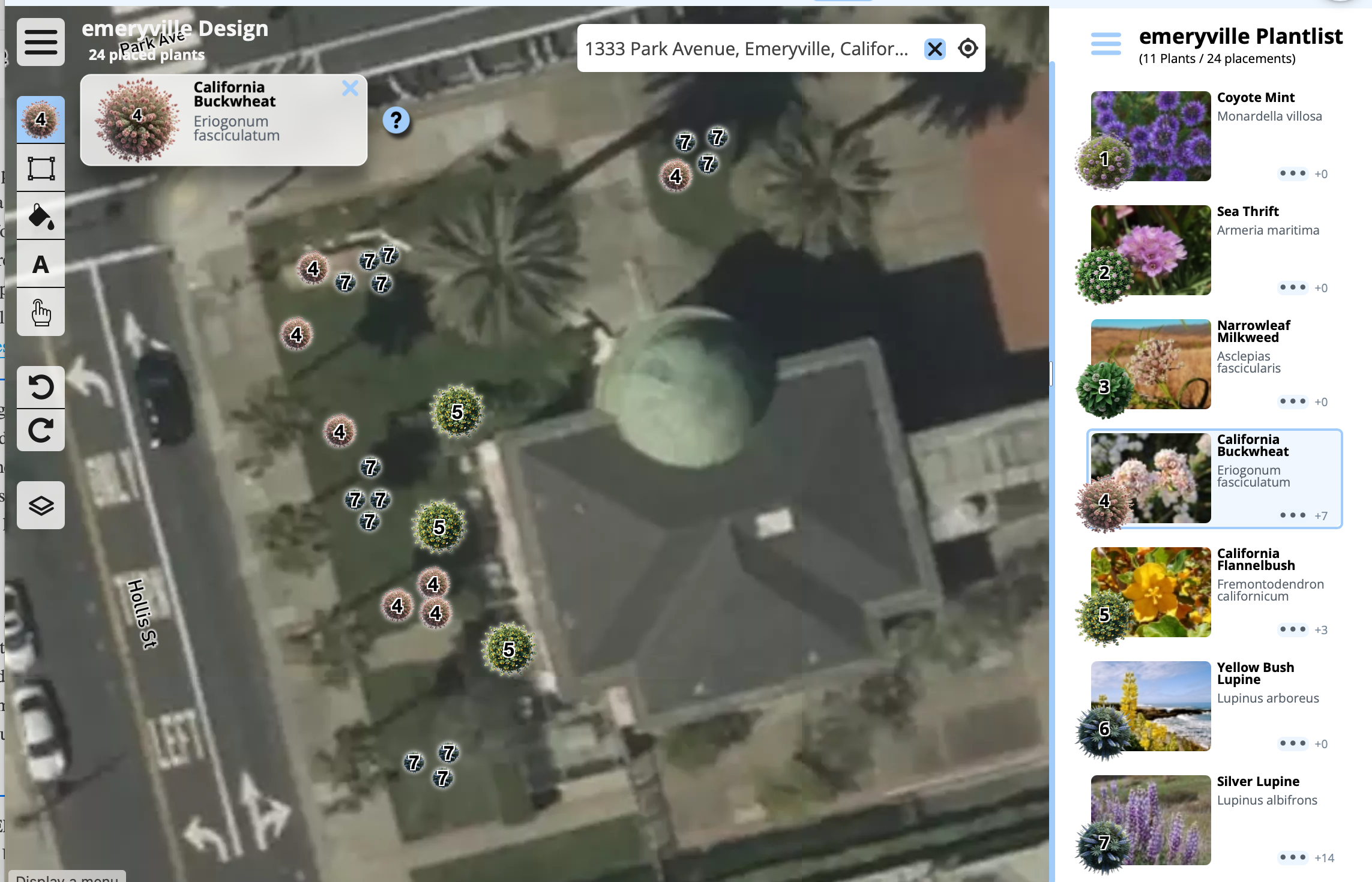
Input your address and the web app will pull up the google map of that address, then you can choose a plot category -low water, part shade, etc. You can then choose your plants, hit the design button, and then place plants from the list directly on to the map. Is it a tad kludgy rn, maybe. But I love the idea of making this intimidating stage so easy. Do I think you still need a designer that is familiar with the plants, yes.

So you can see here it looks quite a bit like Calscape. The pictures are nice and you can click on them to get to a plant info page. And in the picture below you can see the design tool. You can add plants at the correct size, make landscape areas and label them, etc. I haven’t messed about with it extensively yet.

Do I think the Emeryville City Hall landscape could use some upgrading? Yes, I do. :)

Jepson Herbarium at UC Berkeley - I am VERY excited that I will be getting to tour the Herbarium this October for Parent’s Day at UC Berkeley. Although, for some reason I thought that this was NOT open to the public. I think it is though. See info about visiting here: https://ucjeps.berkeley.edu/main/guidelines.html

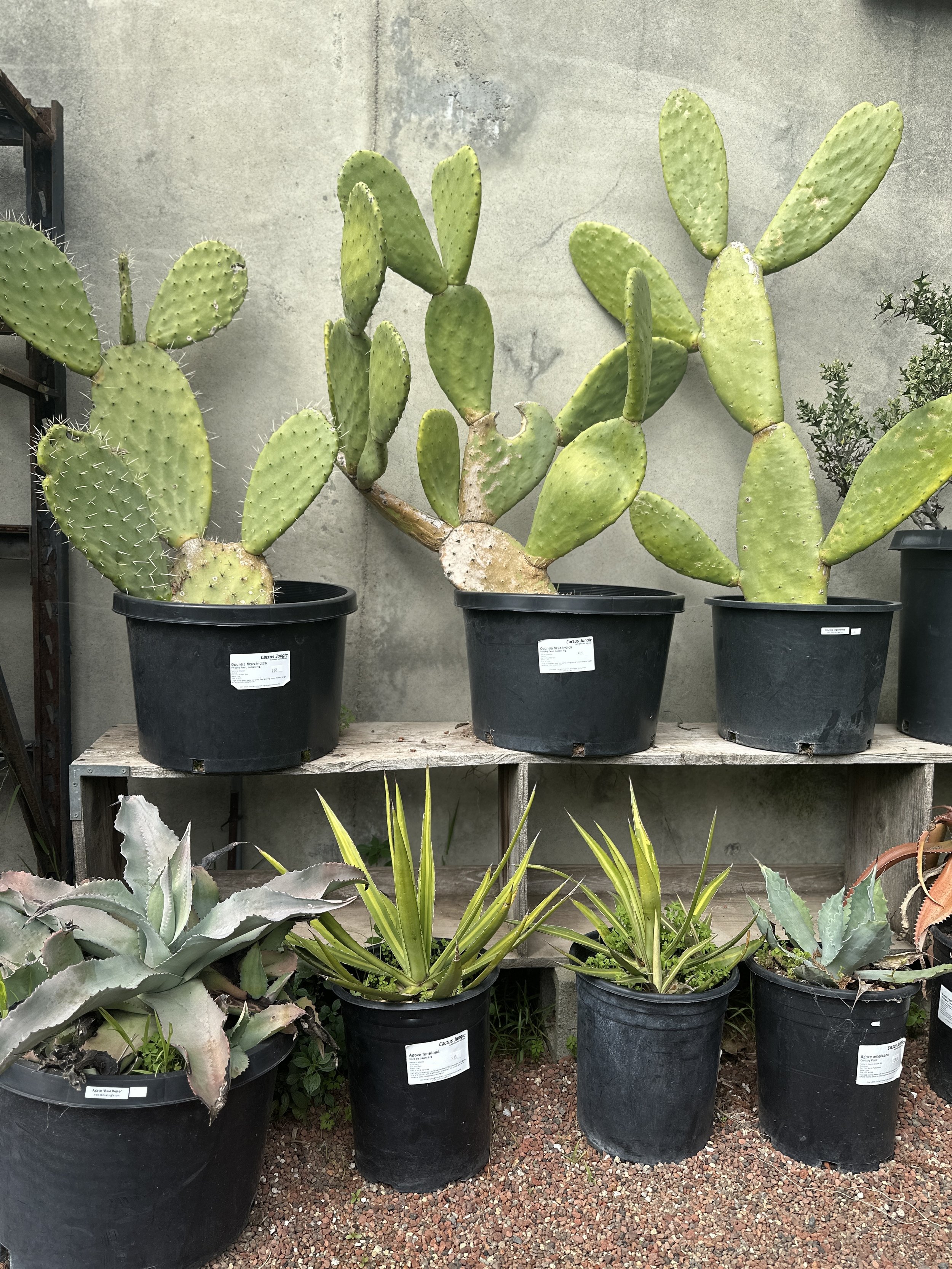
Local Nursery Visits - Cactus Jungle - Berkeley, CA

I do spend many hours at wholesale nurseries for work but there's something special about wandering into smaller retail garden centers that I totally love. In any city I visit, I look up the retail nurseries and try to visit them. The Bay Area has an absolute wealth of cute retail nurseries that I love to visit.

Don't get me wrong - I still get a thrill when I visit a big wholesale nursery with rows and rows of amazing plants. It can be fun to bring clients. They're the workhorses for our industry and I appreciate that.

But a cute little neighborhood boutique nursery? I love it. The employees need to sell that stuff and they make the best displays. It's not just about the plants, it's about all the cute tchotchkes and garden accessories your heart desires.

The staff at these smaller establishments create little moments of delight around every corner - a painted pot paired perfectly with a bright succulent, a collection of native plants arranged to show how they might complement each other in your garden, or some colorful combination of Fermob furniture that helps you picture those items in your own garden. I often have clients who have visited Flora Grubb or Flowerland on Solano that come to me gushing with excitement and are inspired by visiting these nurseries. And I feel the same way when I go to them!

The difference is in the intention, I guess. Wholesale nurseries know we need them regardless - we need their inventory and they know it. We are there to pick up 25 Lomandras or whatever and don’t have time to linger. The smaller retail nurseries craft experiences, not just inventory. Their employees have both the time and directive to create inspiring vignettes that make you imagine possibilities for your own space.

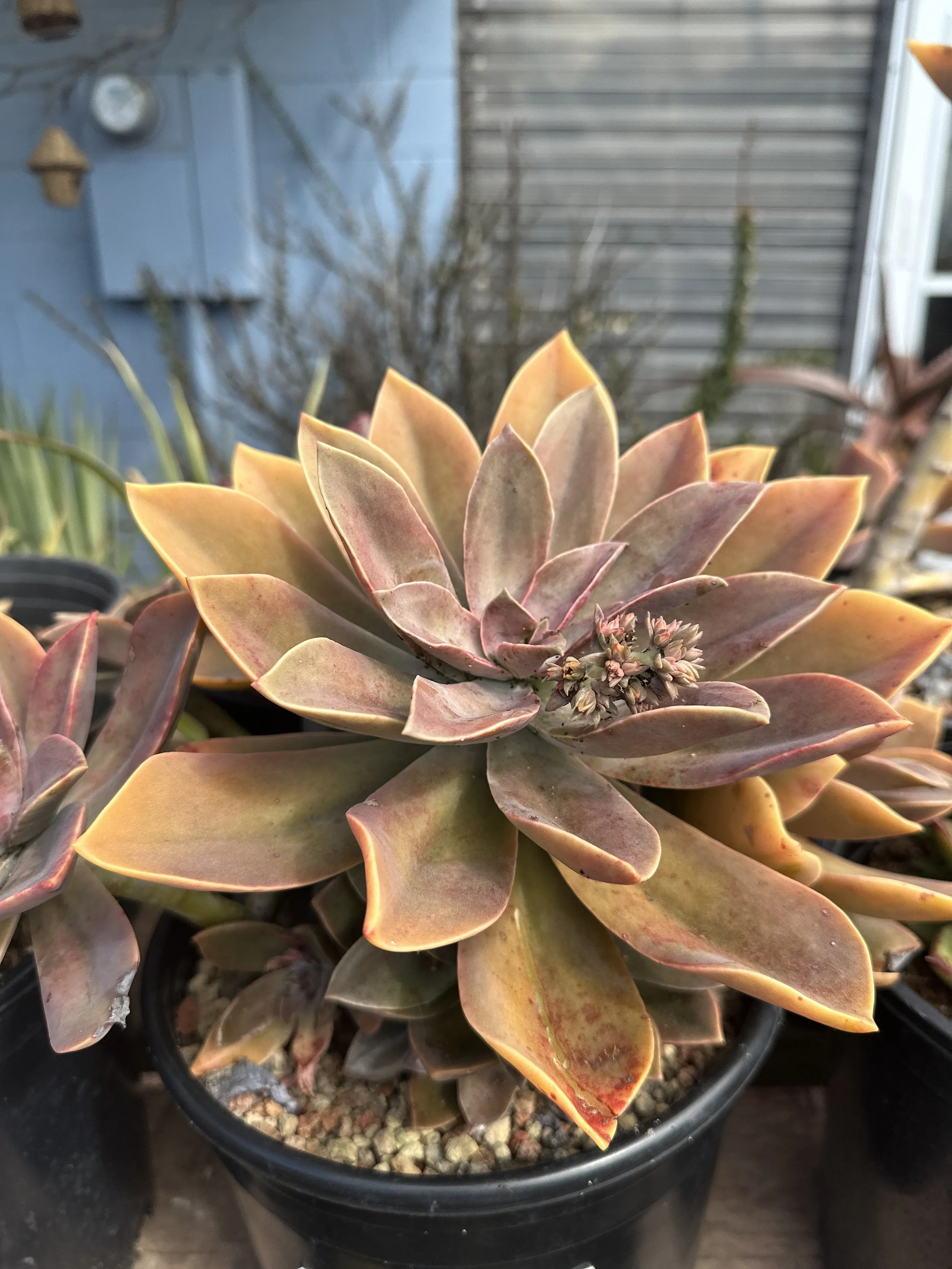
We stopped by the Cactus Jungle in Berkeley (I did not realize there was a location in Marin too! I’ll have to do a nursery crawl on that side of the bay soon) on our way to another errand this weekend. I don’t remember it having a cute little boutiquey indoor area but it has honestly been a looooong time since I stopped in here. The staff was nice and helpful. We told them about how we rampantly kill every air plant we buy and they sympathized. LOL. They haven’t quite reached the cuteness heights of Flowerland but it’s a lovely nursery and everyone should visit it.

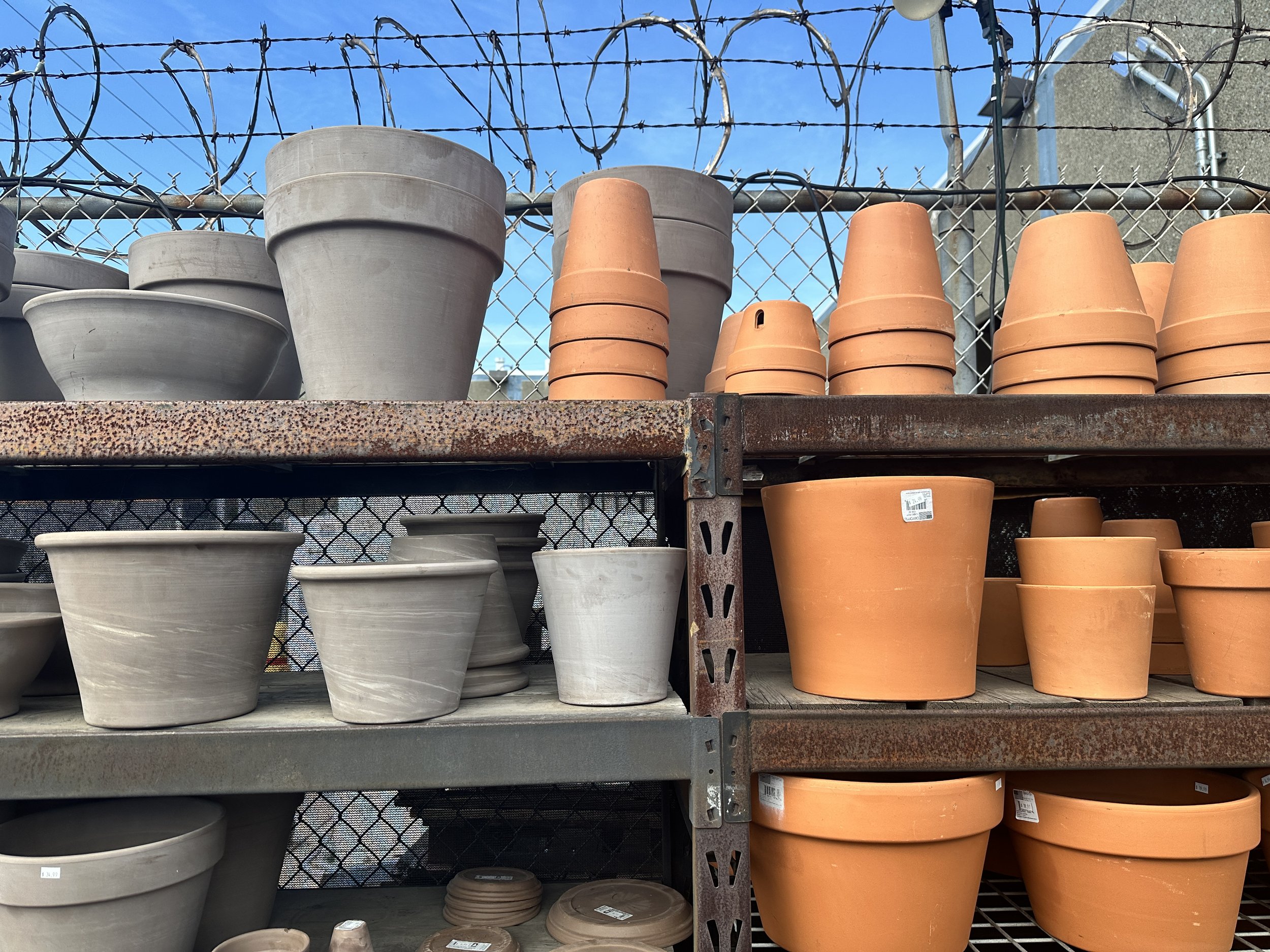
Grey and traditional terracotta pots

I have recently noticed these grey terracotta pots everywhere. I really like them! We did buy a smaller shallow one and have started potting it up with succulents. I’ll post a pic of that at some point. We do also have to go back to get a few more pots and one cool succulent T. is still thinking about. OMG what if someone else bought it already?!?

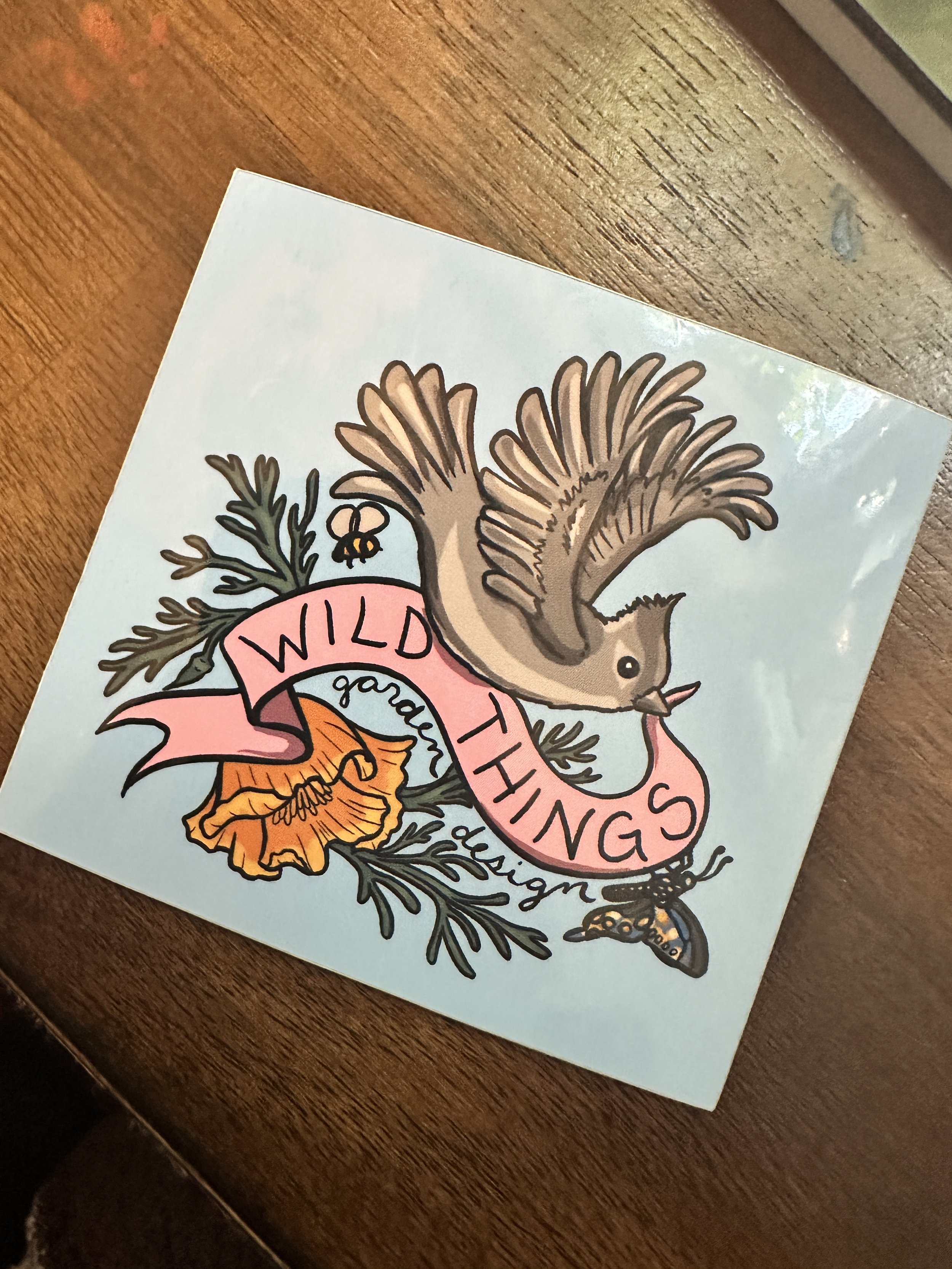
I've been working on a cute logo

Here is the sticker I ordered. I meant for it to be diecut… So I have ordered more and actually ordered them correctly.

I did a bunch of sketches and then started tracing in Procreate. I’m not very good with Procreate yet and was getting very frustrated!! I asked my friend Jenn of Vettha Arts to help me out as she is an amazing artist and very skilled with Procreate!

Well, she transformed this for me by refining the quality, changing p some shapes to read better, and also really made the CA poppy leaves look WAY better. so, thank you, Jen!

I’m using her Procreate file to help me understand some of the ins and outs of this program. I admit, even after watching a bunch of masking videos, I am still a but unsure how I will need to use that feature.

Garden Design Styles

When I tell people I am a garden designer, they often ask me what style of garden I design. The answer is usually that I design (to the best of my ability given a million variables) the garden that my client desires. The garden needs to work for the client! I know many designers prefer to design in one style or another, and so their portfolio reflects that, and then people wanting that style seek out that designer. I have not really reached that point and I probably never will.

I did name my business Wild Things, in part, because I love a wild and unruly garden with lots going on and colors and wildlife and fun garden elements and nooks to explore. That kind of garden is great but not always practical. I ALSO love designing super modern gardens with clean lines and architectural plants just as well.

A lot of what I love about designing residential gardens is the space planning aspect of it. I spend an inordinate amount of time imagining what my clients might want to do in the garden, how they will move about in the garden, what will happen at different seasons, what they say they want/need vs. what I think they might actually want/need, etc. Of course, I'm just imagining all this, and what I really need is for the client to be as articulate as possible about THEIR OWN garden imaginings.

There is a business plan activity that I have encountered several times now that wants you to describe your perfect client. One of the items on my list is a client that is really engaged and curious about the possibilities. They will have a Pinterest or Houzz board with ideas, they will have memories of gardens from their childhood, and they will have some practical views on what they and their landscape can manage.

It's actually a tall order. If someone has never designed a landscape, it might be hard for them to come up with all of these ideas. That's why Pinterest and Houzz are actually such good resources for folks. Just diving in and getting a feel for what might be possible and what you find visually intriguing is a great start. I do often have to sit down with clients and dive into WHAT about a picture they are drawn to. Is it a specific plant, the style, a color combination, etc.

So the job of figuring all this out is really what draws me to this vocation. I do, of course, love plants, but plants come much later in the design process.

I was thinking the other day about how I played as a child. And I basically sat around in my room with my dollhouse decorating it and redecorating it. I had a million of those glass or ceramic animals you could buy at the Hallmark store (there was one just outside my neighborhood), and they were the inhabitants of my dollhouse. Mainly because I thought most human dolls were creepy. So, that's a lot like what I do now. LOL.


More Animals of Landscape Design

Git along, little doggy! Yes I know it is ‘dogie’ and yes, I know a dogie is a baby cow. I can’t help that my brain just says this whenever I see a dog.

I’m not a dog person. I was never around dogs as a kid and dogs always seemed aggressive. The people who HAD dogs seemed aggressive, as well.

I have changed my tune a bit. I had dog neighbors when I was moved in with T. and they were nice dogs and the owners were nice. I enjoy meeting client’s pets. I do stand by the fact that dogs smell bad a lot of the time and you have to wash your hands after touching a dog no matter what.

I will continue to be a cat person.

I don’t see a dog here, do you?

Some plants and a visit to American Soil and Stone

I like the textures in the photo I took at American Soil and Stone. So stripes, much vertical! I find visiting stone yards to be very satisfying. Magpie-like I usually want everything there.

Two plants I am enjoying in my own yard right now. This yellow lotus plant and my Spraxis bulbs! Aren’t hey pretty?!

What else has been happening? We have been doing a few small plant installs at work.

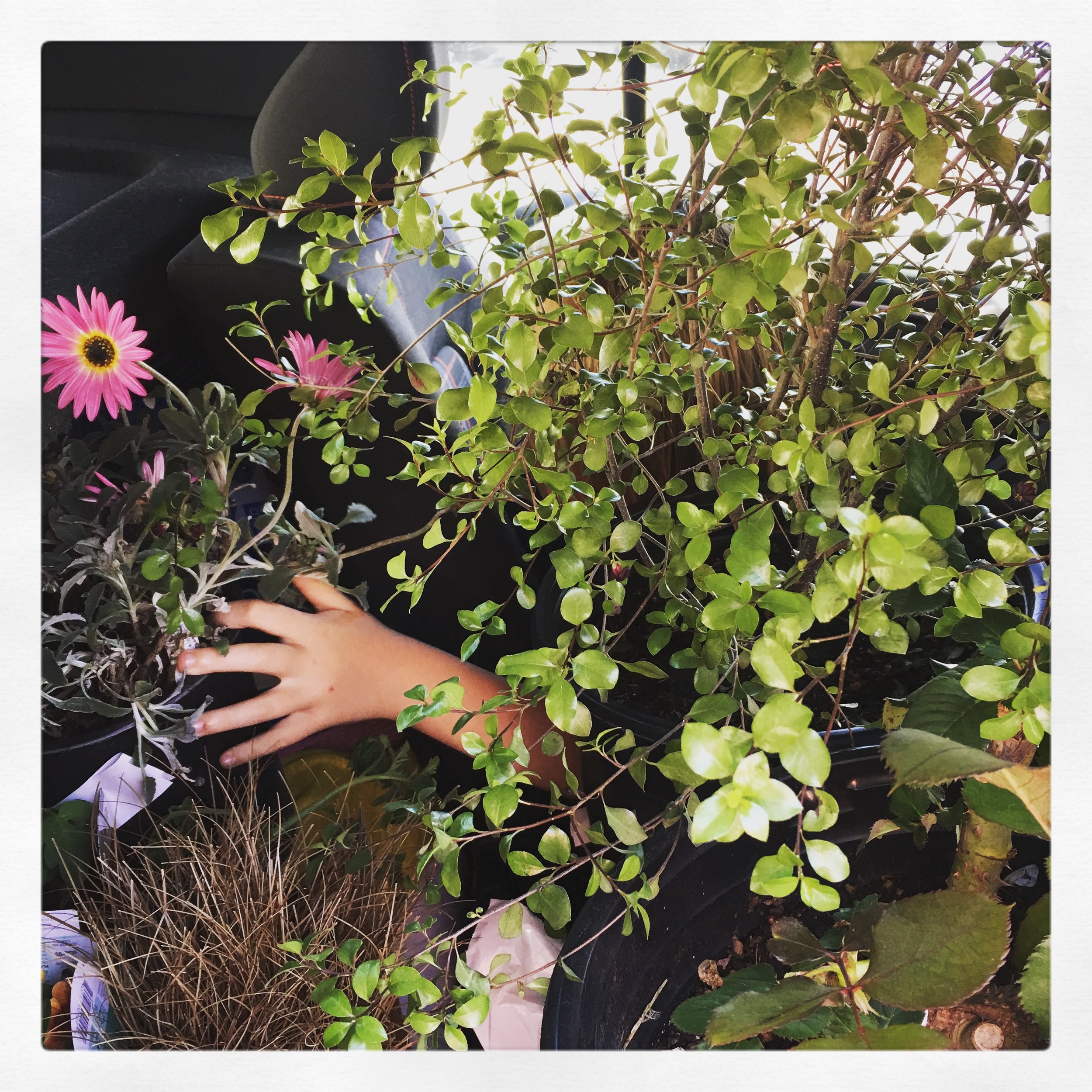
Oh and I kind of love this picture of J*** buried under plants in the car. LOL.

A Visit to Moose Metal in Concord

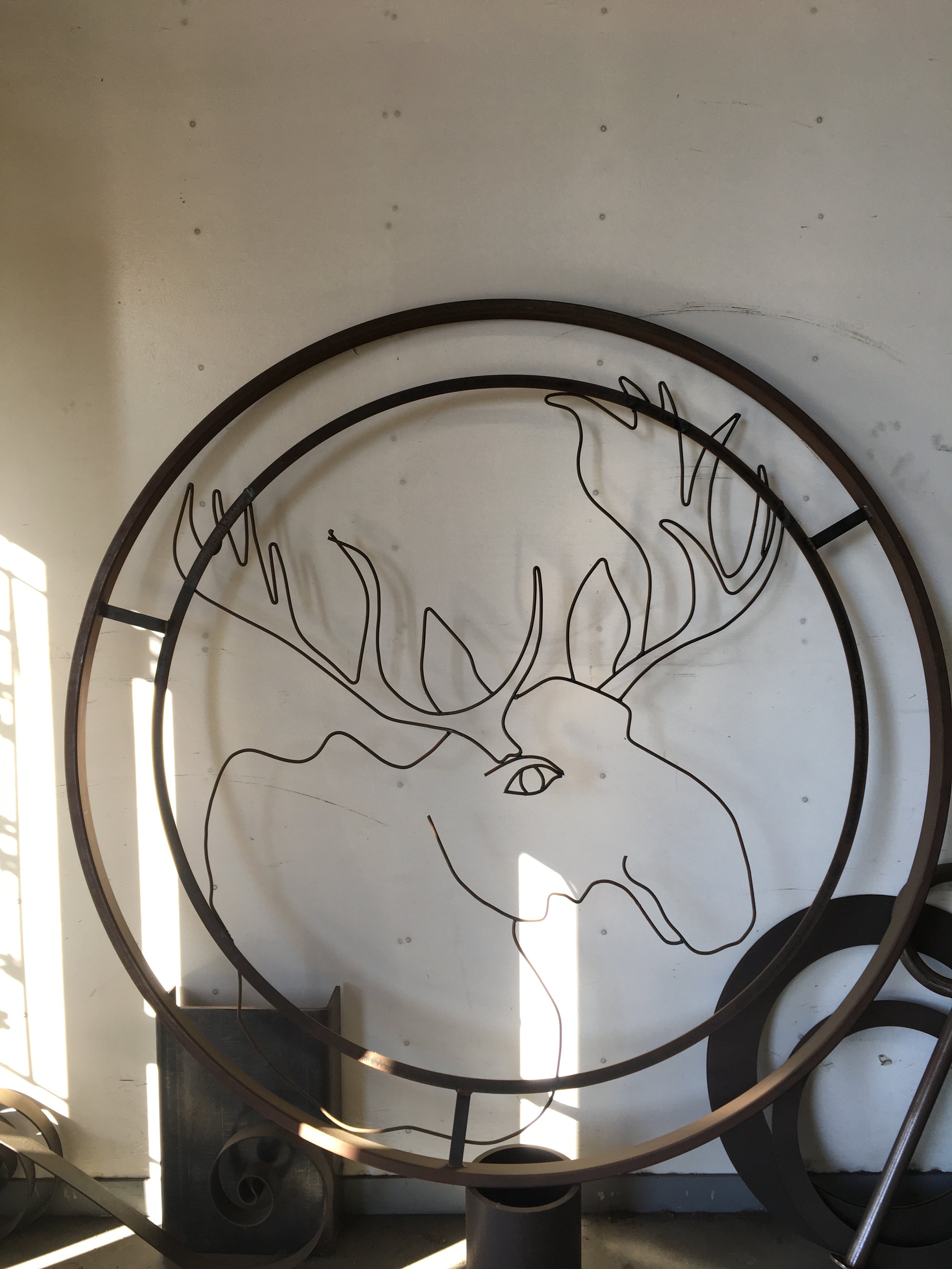
I stopped by Moose Metal to inquire about a metal project for a client. How cute is this metal moose logo?!

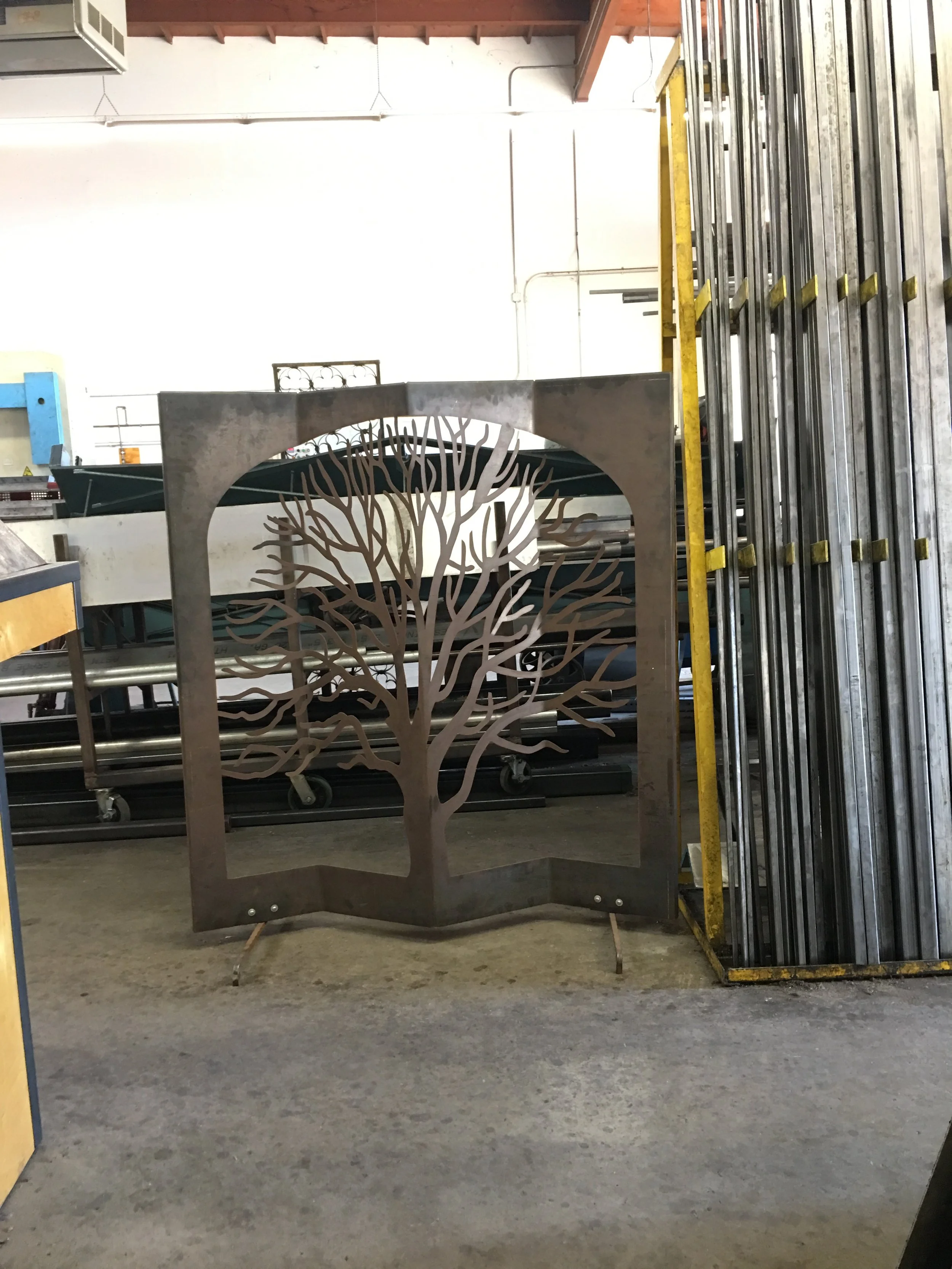
It was a wealth of fun metal detritus for me to snap pics of.

Many shapes and colors!! I really, really want to include colorful metal elements in my landscape designs. My pinnacle of silly landscape color you ask? I bright pink arbor. I want one myself so surely everyone else will, right?!

More cute moose themed items :)

2016 APLD International Conference

I had a fantastic time at my second APLD Conference. It was wonderful to reconnect with friends from last year and see familiar faces from the Bay Area.

Just outside the hotel was the Santa Fe Railyard Park. The park featured beautiful hardscape and plant designs, a children's play area, and lovely gardens. I particularly admired how the designers incorporated the railroad tracks and other historical railroad elements into the park's design.

Right from the start, I was so excited that the keynote speaker was W. Gary Smith, the author of From Art to Landscape: Unleashing Creativity in Garden Design. I totally fangirled a bit and brought my copy of his book for him to sign. He was super nice and signed my book for me. Gary is an accomplished landscape designer, having won APLD Garden Awards and worked on many renowned gardens. Coming from an art and design background myself, his book really attracted me and I often refer to it.

These are in no particular order. I’m just dumping photos.

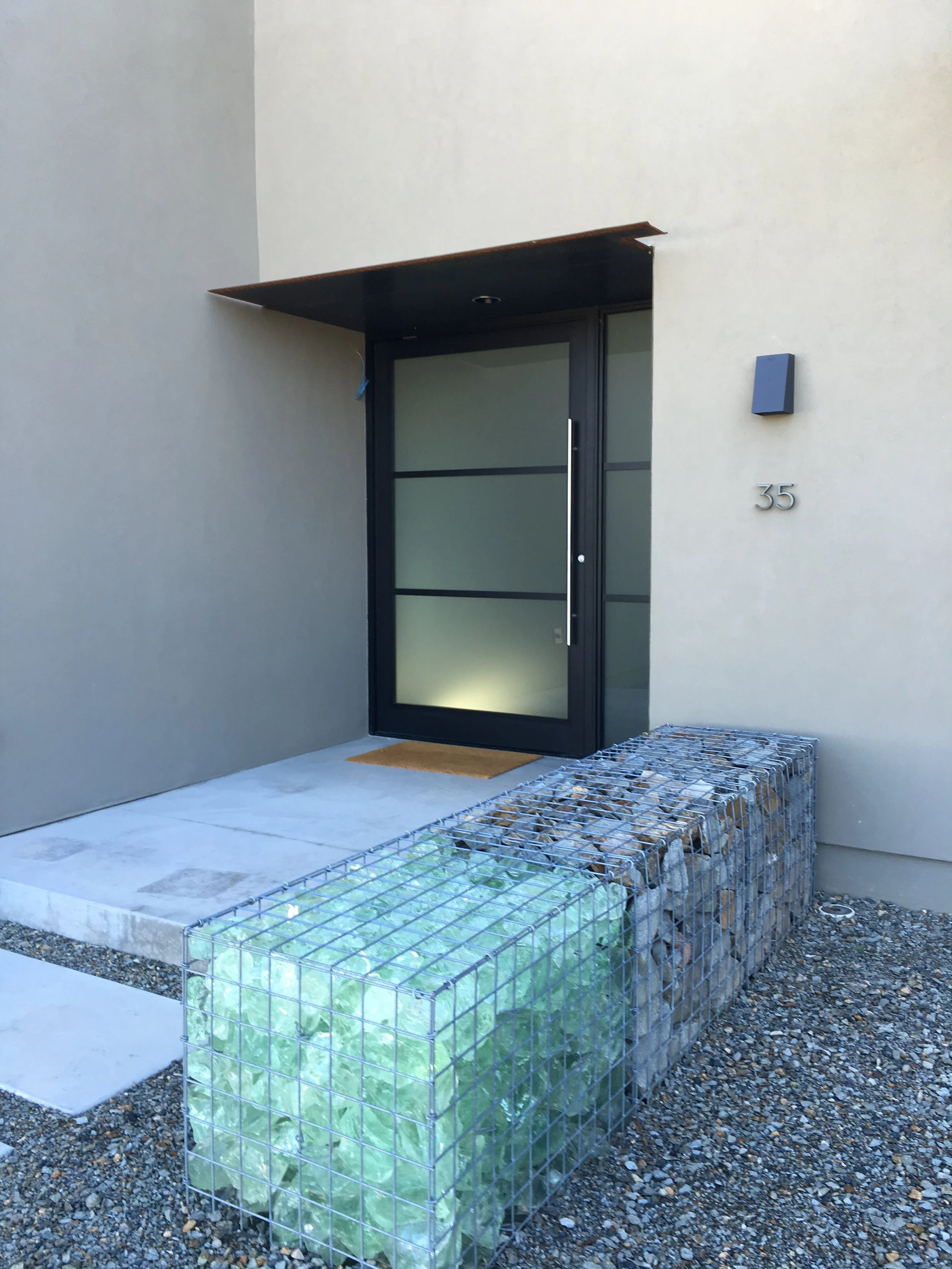
Check out these interesting gabions. They are partially filled with glass slag chunks! Neat!

This garden just had a TON of amazing architectural details. I love to fun round pavers, the colors! The whole thing!

APLD Plant Fair

Sadly, I didn't manage to take enough photos during the APLD Bay Area District Plant Fair. Next time, I must remember to capture some overview and crowd shots!

The APLD Bay Area Plant Fair is a fantastic event where growers and nurseries come together to showcase their latest and most popular plants. It's a great opportunity for landscape designers and plant enthusiasts to learn about new varieties and get expert advice on plant care and cultivation. I always enjoy attending and hearing the detailed stories and tips from the growers. It’s a fun and informative event that highlights the best of what our local nurseries have to offer.


I won this in the raffle. Now I need to figure out what to do with it!

I would also like to send a shout out to the amazing APLD Bay Area Board Members and Volunteers who pout this event on. Thank you so much for all your work!

Pots on a Deck

This area is quite hilly, and many homes feature decks with stunning views. In some cases, the backyard slopes so steeply that a deck is the only way to fully enjoy the outdoor space. Beautifully designed plant containers can enhance the deck experience, surrounding you with nature and making it even more enjoyable.

I love designing pot vignettes. Selecting pots with harmonious colors and appropriate sizes is crucial. Tiny pots on a large deck or oversized pots on a small deck can frustrate clients and detract from the overall deck experience.

Container shopping can be quite enjoyable, whether you're doing it alone or with clients. It's essential to invest in high-quality containers. From my observations of various client landscapes, I've noticed many small, cheap, and abandoned containers cluttering their side yards. I really don’t love the fiberglass containers I keep seeing. Pottery store inventory can change frequently, so it's important to shop and purchase your pots in a timely manner.

I love the other garden ornaments you can find. Concrete cats, pigs, chickens, etc.

Plants ready to get installed into new homes!

A selection of pots about to get planted up. In the background there you can see two crappy older fiberglass (or plastic even) pots that have simply failed at the seams. They will get hauled off and dumped. We replaced them with nicer ceramic containers in the same basic shape. I love this color palette.

People can get serious sticker shock when it comes to buying contains. Jaws hit the floor, etc. I like to emphasize that they will lat a lifetime and beyond.

A visit to Delta Bluegrass

If you are looking for quality sod in the Bay Area Delta Bluegrass is the place to go.

In the droughty Bay Area, we're encouraging people to remove their lawns. While there is a time and place for some lawn in a residential setting, it's often overemphasized. A common misconception is that families with kids need a huge lawn for play. In my opinion, this is a myth. Lawns are large, monotonous spaces that can limit play opportunities for children. A sprawling lawn might be useful if a child is passionate about soccer or another ball sport, but otherwise, it doesn't offer much in terms of stimulating play and I’m just not into it at all!

That said, a small patch of lawn can be nice, I admit! However, if you simply want a cool, grassy spot to relax with a glass of wine, a meadow is a far better option. Picture an Adirondack chair under dappled shade, with your bare feet in a soft, lush meadow—that's my idea of heaven. OR, picture a couple o tree stumps set up to be a table and chairs and your small children gathered around adding items like pine cones or flowers or rocks to the “table”. Anyway, meadows not only provide a more diverse and interesting landscape with ‘scope for the imagination’ - to quote Anne of Green Gables, but they also support local biodiversity and require less maintenance than traditional lawns.

But, again, there is a place for lawns even in the Bay Area. And there are low water and native options and that is why I am at Delta Bluegrass to hear about them all.

Rolls of Sod at teh Delta Bluegrass growing grounds.

Kurapia! Kurapia is a ground cover plant developed (I think developed in Japan?) from Lippia nodiflora. Kurapia is a low-maintenance, drought-tolerant ground cover that is being used as an alternative to traditional lawns. It requires less water, fertilizer, and mowing compared to typical grass lawns, making it an environmentally friendly option. Kurapia also has strong resistance to pests and diseases and can handle a wide range of soil types, making it versatile for various landscaping needs. Its ability to establish quickly and provide a dense, green coverage makes it an appealing choice for residential and commercial landscapes. It fills in quickly and WILL overrun sidewalks/hardscapes. It works well in shade as well as sun. In the sun this is not great if you have lids and pets running about because it will be absolutely COVERED in bees. In shade it does not flower much.

They have a handy dandy installation exhibit of various sods

The sod cutting and rolling machines were badass. I love weird industrial equipment. They also fed us lunch!