Messing about with Morpholio Trace

I’m messing about with Morpholio trace. I signed up for the Henry Gao Morpholio online class. I need the structure of a class to get myself to do this, otherwise I will keep putting it off.

My current workflow for doing perspective drawings is cumbersome compared to what I am imaging it could be with Morpholio.

I don’t do a ton of modeling in Vectorworks. I do a very basic house model and a deck and stairs or a pergola, raised beds, etc. So in that case I rotate around, find a good view, export that as a PDF and print it out and then switch to analog sketching. I have a nice desktop light table in the Huion 23.5”. This was a game changer for me and I highly recommend getting one. I wont need one if I am using Morpholio but I use it for other things and I love it!

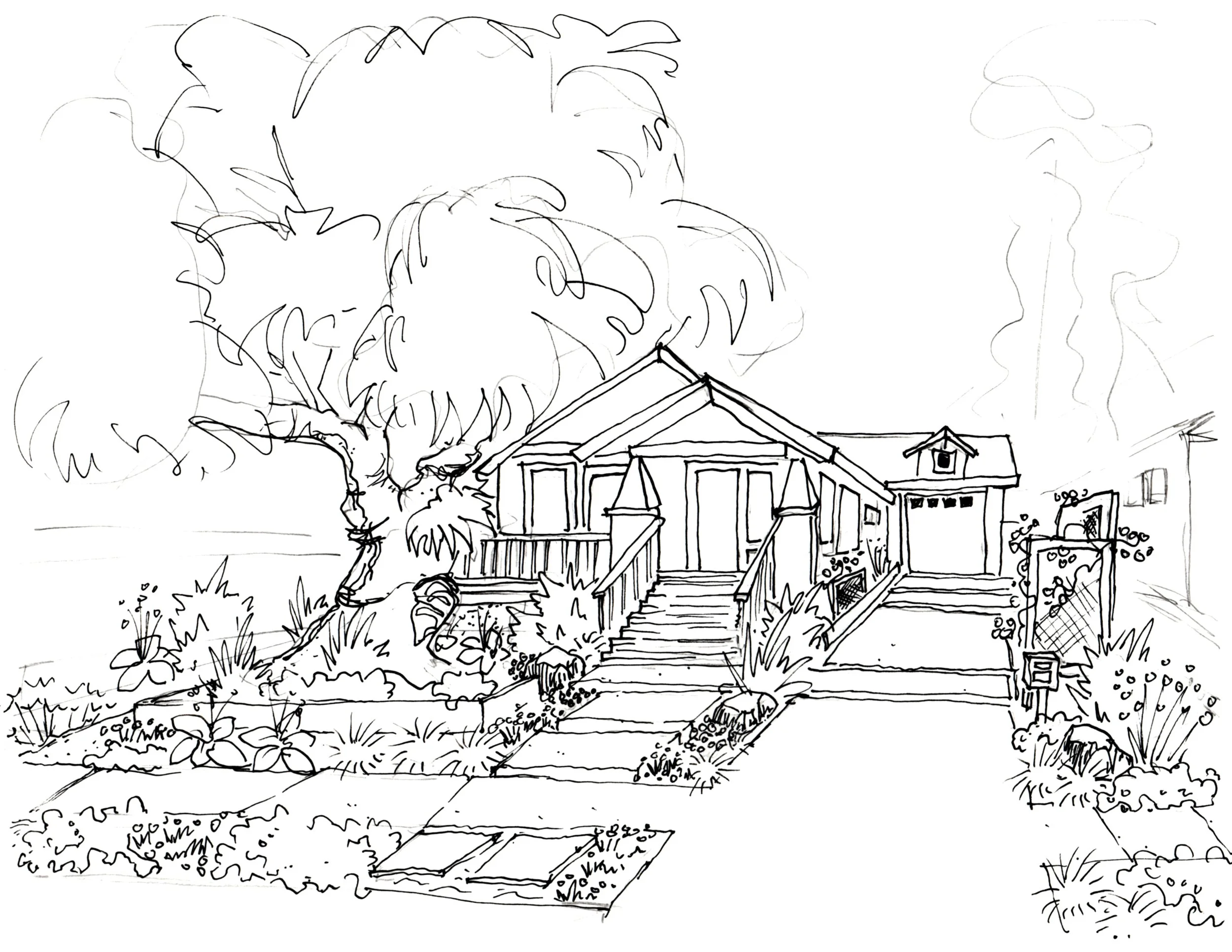
  1. If I have not created a model in Vectorworks I choose a photo from a site visit, use a google street view screenshot, OR even a photo from somewhere like realtor.com if the house has an old listing still active.

  2. I change the opacity and then print it out.

  3. Using a piece of printer paper I then trace it in pencil using my light table.

  4. Then I remove the print out, and trace the pencil drawing using a lightweight fineliner. I like the Derwent LINE MAKER pens. I usually use another piece of crappy printer paper for this. I often skip this step and go straight to step 5.

  5. I trace it again in pen on a piece of marker paper.

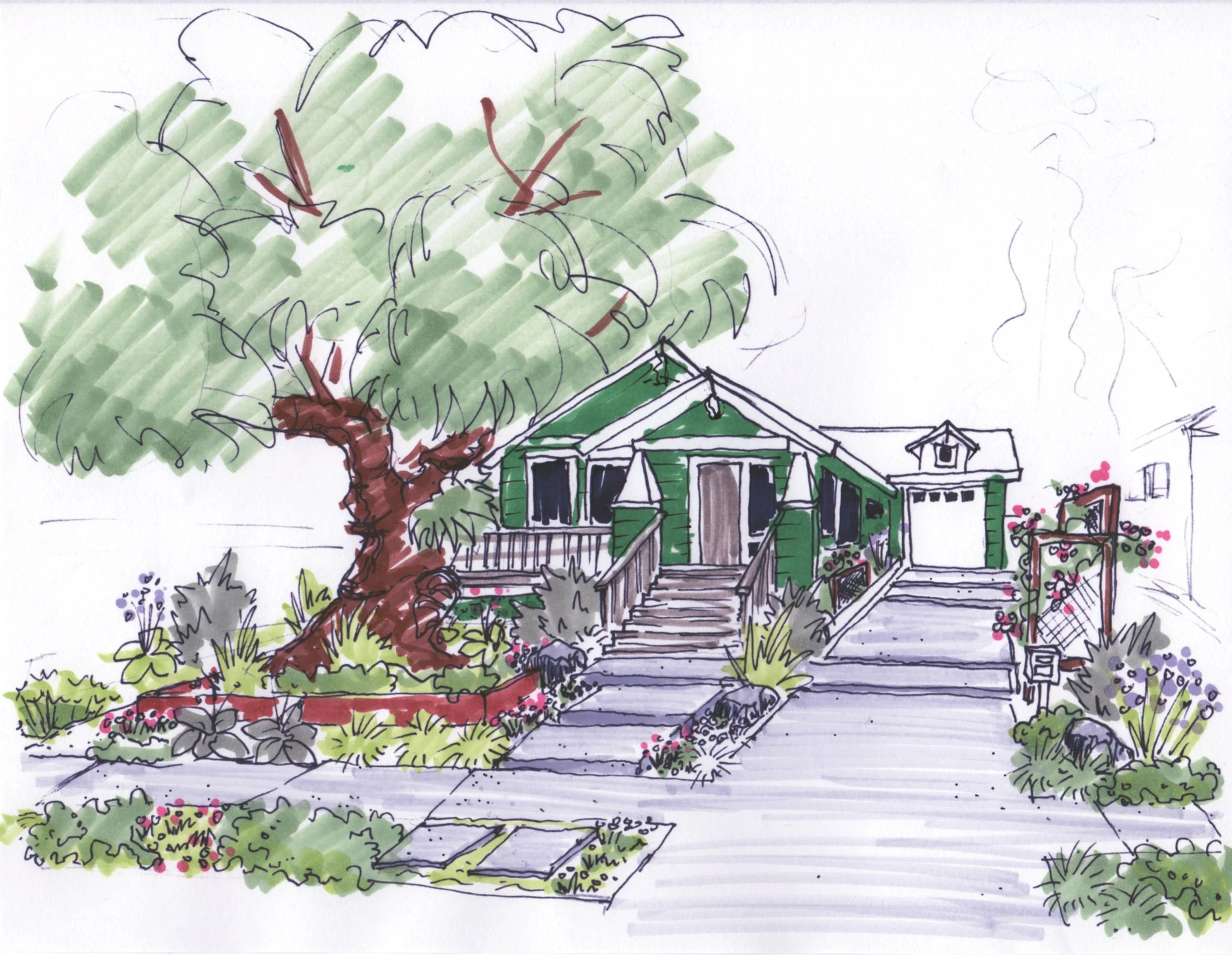
  6. Then, I color using AD markers. I learned coloring with markers using Chartpak. At some point I switched to Copic but now I have mostly switched BACK to Chartpak. Copic are alcohol based and I really find that they do not blend well. Chartpak are some other solvent, I’m not sure what, but I love the smell and they bland much better. I do have a zillion markers so I use a combo of Copic, Chartpak, and Tombow.

PHEW! As you can see, this is def. cumbersome! Gosh, get with the times, Laura!

As you can see, this is pretty loose and looks like a coloring book. People do not necessarily want to pay me to spend a ton of time on this so I do it as quickly as I can and the result looks pretty amateurish. Many clients are not used to visualizing a perspective from a plan view drawing so even this is useful for them and this can really help sell your design! The coloring on this one is actually especially bad. I can tell I DID NOT use marker paper when I did the color layer. :O

This is an old project but I am going to use it for my 1st learning project in Morpholio.
Messing about with Easyscape

If you are a big Bay Area plant nerd you are probably familiar with the website Calscape that is part of the CNPS (California Native Plant Society). It is an invaluable resource for native plants in California. They tap in to the Jepson Herbarium* database which you can find here. They did recently update the website and add some new offerings to help people design well with native plants. You can find inspiration, example planting plans, and find certified native plant designers (including Wild Things Garden Design)!

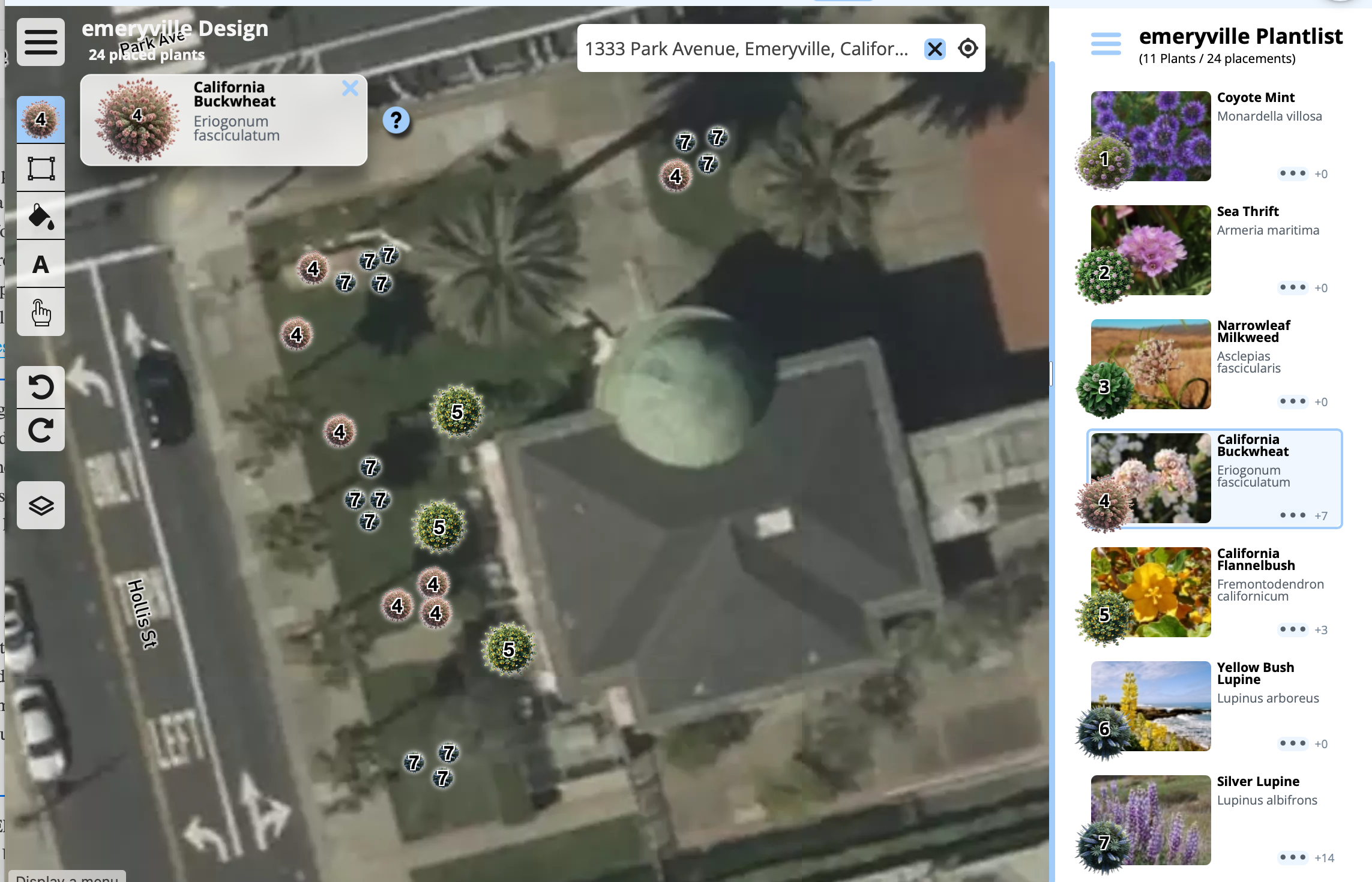
At the most recent APLD International Design Conference in San Diego we were able to tour the home garden of Dennis Mudd the original creator of Calscape. It was a gorgeous garden! But he was also in the process of rolling out his new offering - Easyscape. This is an on the go design tool that helps you design your native garden based on native plants that are local to your area.

How it works:

Input your address and the web app will pull up the google map of that address, then you can choose a plot category -low water, part shade, etc. You can then choose your plants, hit the design button, and then place plants from the list directly on to the map. Is it a tad kludgy rn, maybe. But I love the idea of making this intimidating stage so easy. Do I think you still need a designer that is familiar with the plants, yes.

So you can see here it looks quite a bit like Calscape. The pictures are nice and you can click on them to get to a plant info page. And in the picture below you can see the design tool. You can add plants at the correct size, make landscape areas and label them, etc. I haven’t messed about with it extensively yet.

Do I think the Emeryville City Hall landscape could use some upgrading? Yes, I do. :)

Jepson Herbarium at UC Berkeley - I am VERY excited that I will be getting to tour the Herbarium this October for Parent’s Day at UC Berkeley. Although, for some reason I thought that this was NOT open to the public. I think it is though. See info about visiting here: https://ucjeps.berkeley.edu/main/guidelines.html

Plants are the cheap part

I still love that I get to draw for part of my job. Having grown up with the notion that drawing was fairly useless and not a viable career, I of course steered myself in other directions and did not strenuously pursue drawing seriously. I regret that! I mean.. look around, how is it possible to think that drawing is not a thing of value? Everything you look at was most likely drawn by someone at some point in its development. aaaannnnywhooooo… I’m not bitter or anything.

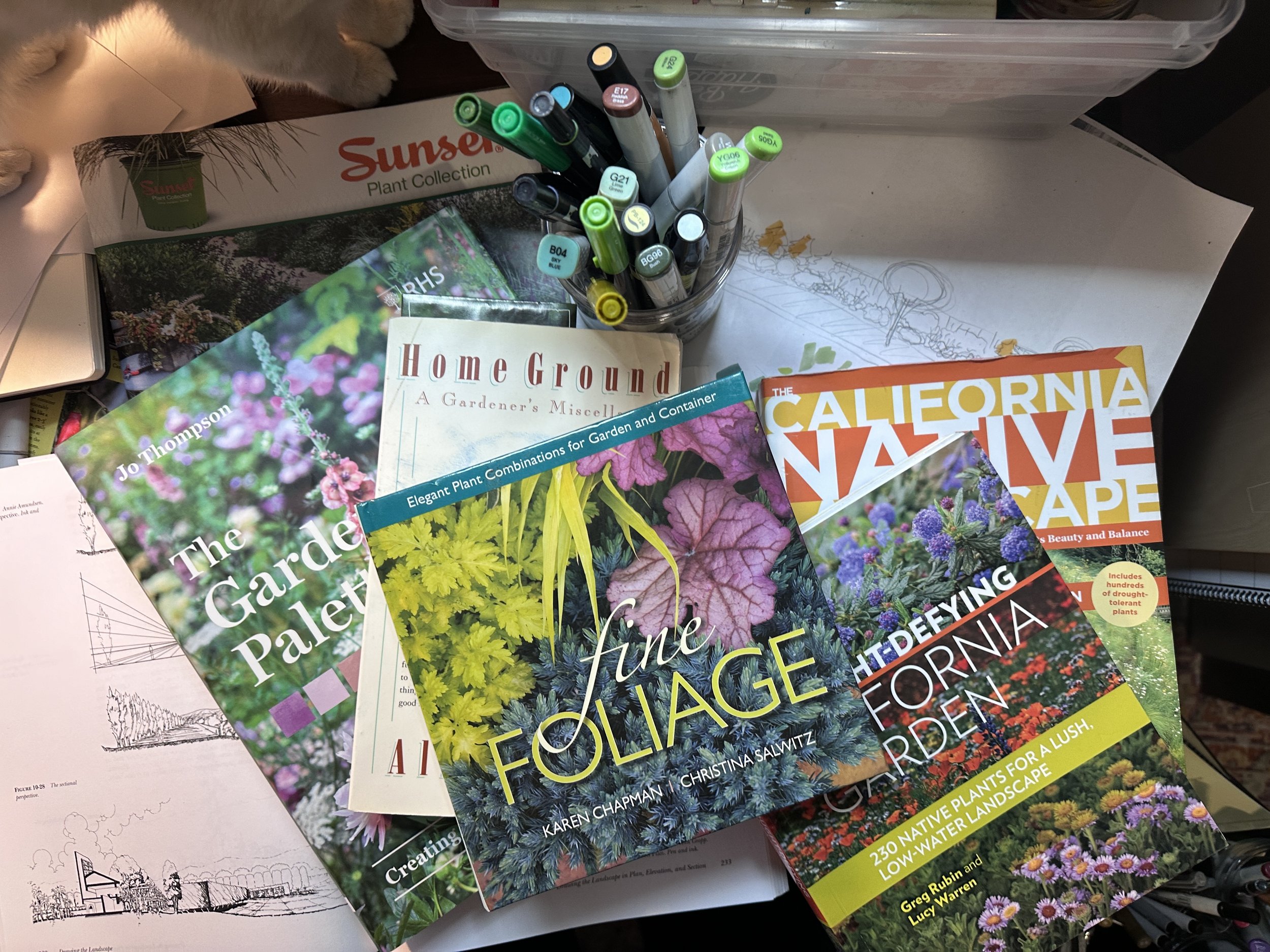
Image of my messy and colorful desk covers in books about plants, drawings, and markers. there is also a tiny cat paw in the upper left.

Plants are almost the last thing to go in and everyone has sticker shock at that point. “Can we reduce the number of plants”? Yea, I guess you could. But why? You will just be disappointed with how sparse your landscape looks!

Here is what your hellstrip will look like with jut the ground covers.

Here is what it will look like with some flowering yet easy care shrubs and some boulders and cobbles. Do it!

Quick Sketches

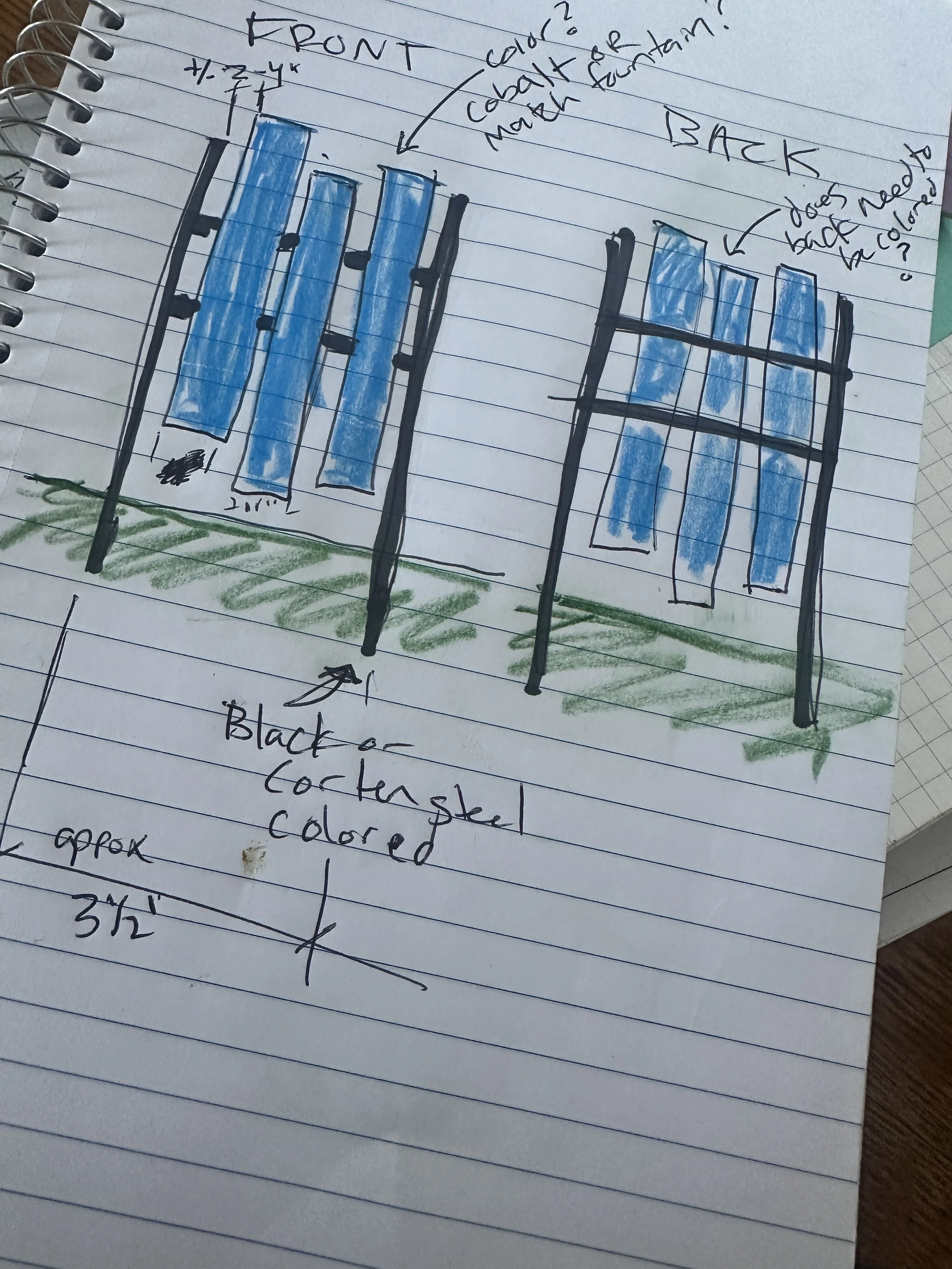
Sometimes you need to just do a quick sketch and send it off to the client or a contractor. In this case the client has a bunch of metal bookcases from her now closed retail store. we are the king up ideas to use up some of this metal that is currently cluttering her garage! What to do?!

scribbled sketch of an idea for a metal sculpture in the landscape

This piece would be serving several purposes. It will help block the view from the next door neighbors upper window while the trees and shrubs grow in, it will use up some of that extra metal in an interesting way, and if we powder coat it to match the fountain color it will serve as another bright focal point in the garden.

This is not a careful sketch, obviously, but it gets the point across in an expressive and informative way.

Pet the Plants! Stachys byzantina

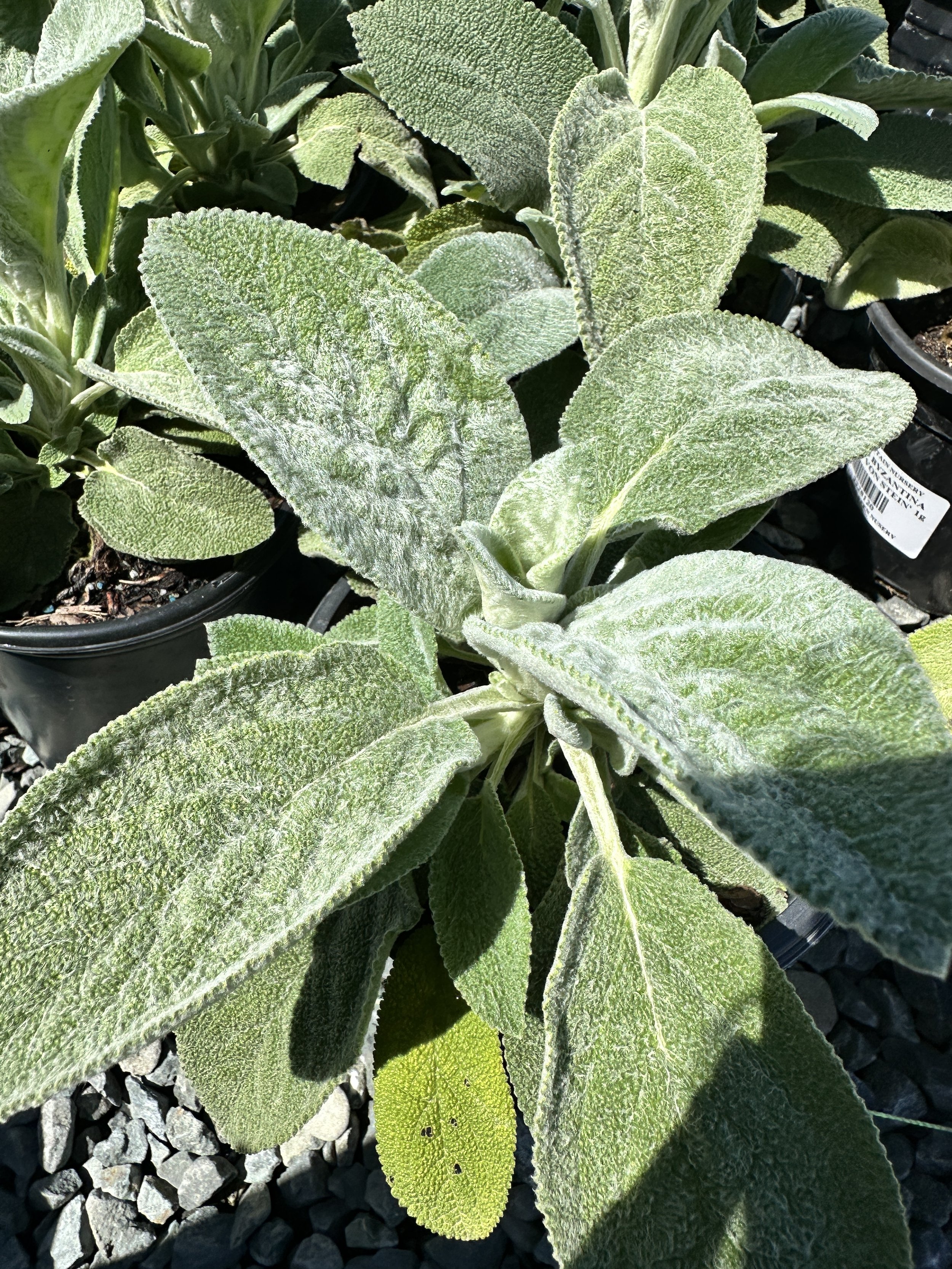
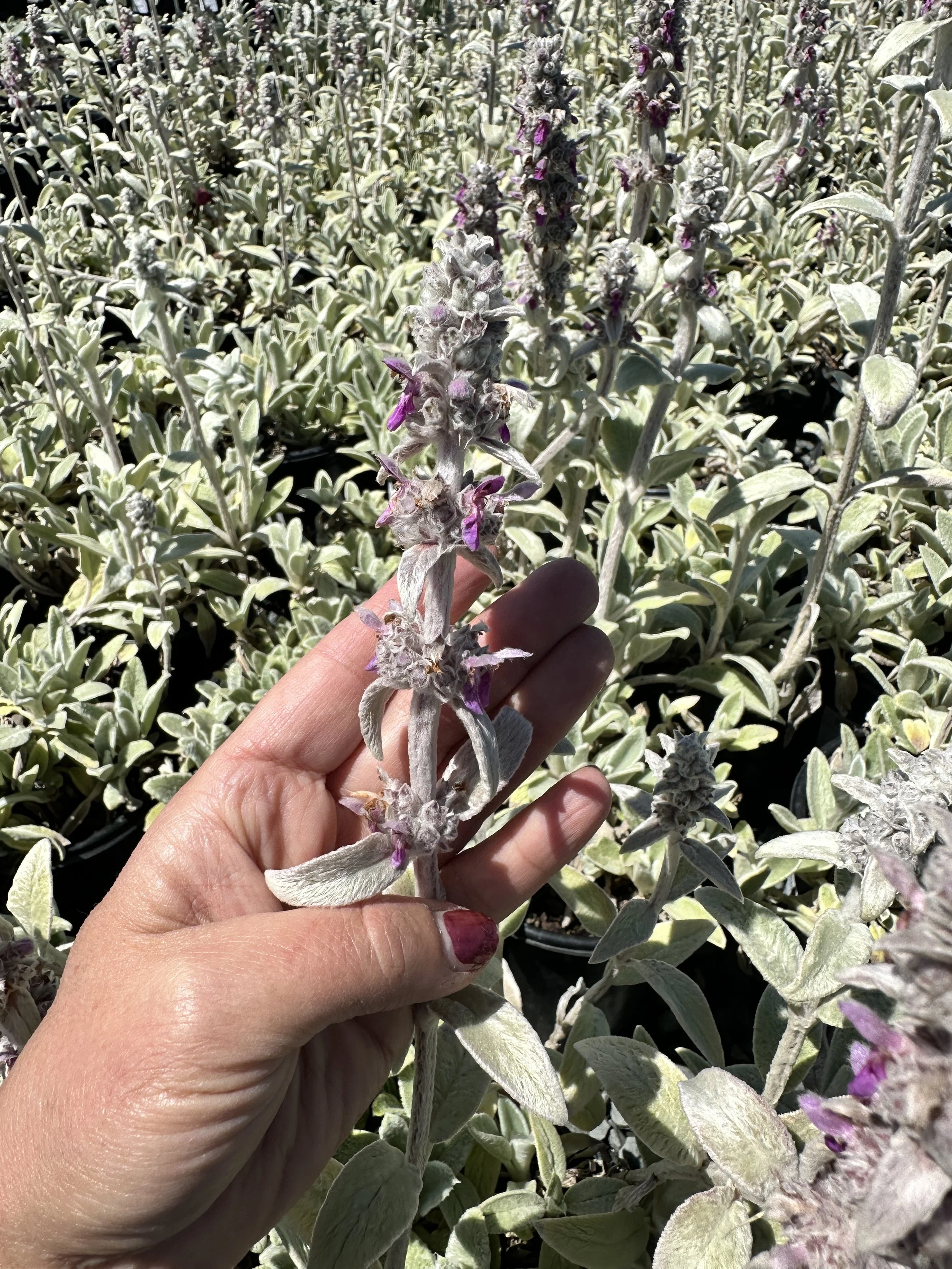
Lamb’s ears are so charming. They are one of those plants that will attract the attention of everyone, even folks who are not interested in plants, no one can resit petting them. They are great for sensory gardens and children’s gardens. I was just enjoying how they looked in rows at the nursery.

Helen von Stein is a variety that has larger leaves. I think this is one of the ones that doesn’t really flower. So maybe good for a garden with kids who are allergic to bee stings.

Very soft fuzzy silvery grey leafed plant. called Stachys byzantine Helen von Stein

Stachys byzantine Helen von Stein

A couple of other varieties were at the nursery today, including ‘Fuzzy Wuzzy’ and ‘Silver Carpet’.

Keep in mind that these guys spread pretty easily, they are not invasive though. Also, do not give them too much water or they get kind of gross and rotten! ew!

Quick and easy visualization

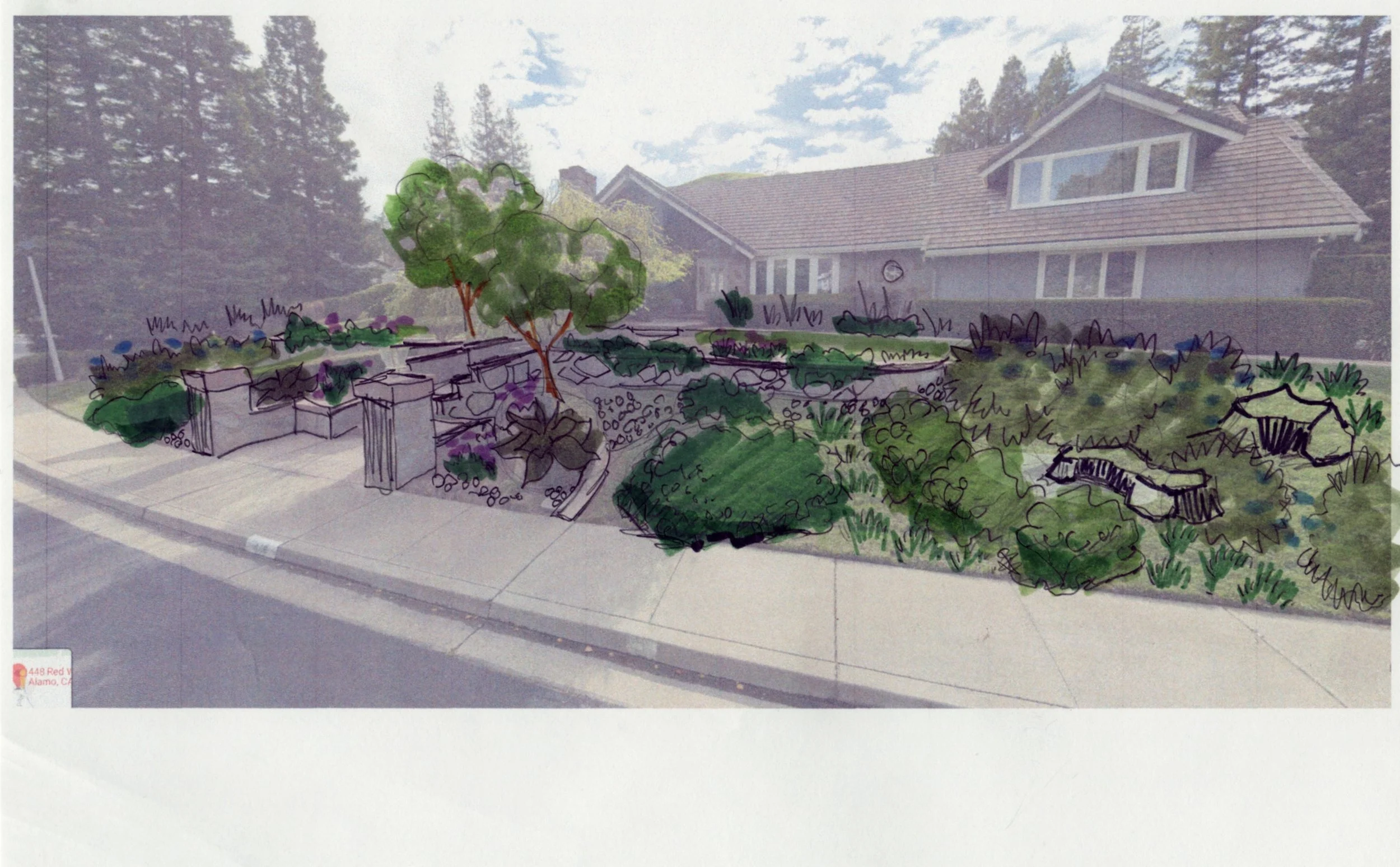
Sometimes I just take a Google Street View screenshot and scribble on it when I am thinking about plants or layouts. Very handy for front gardens! This is not a thing I would use to show a client, though.

Sometimes fast and easy is the way to go!

The side yard is growing in nicely

“Everyone needs a sideyard”, as my boss tends to say. Usually she is talking about people needs a messy work area - a place to keep shovels and buckets, etc.

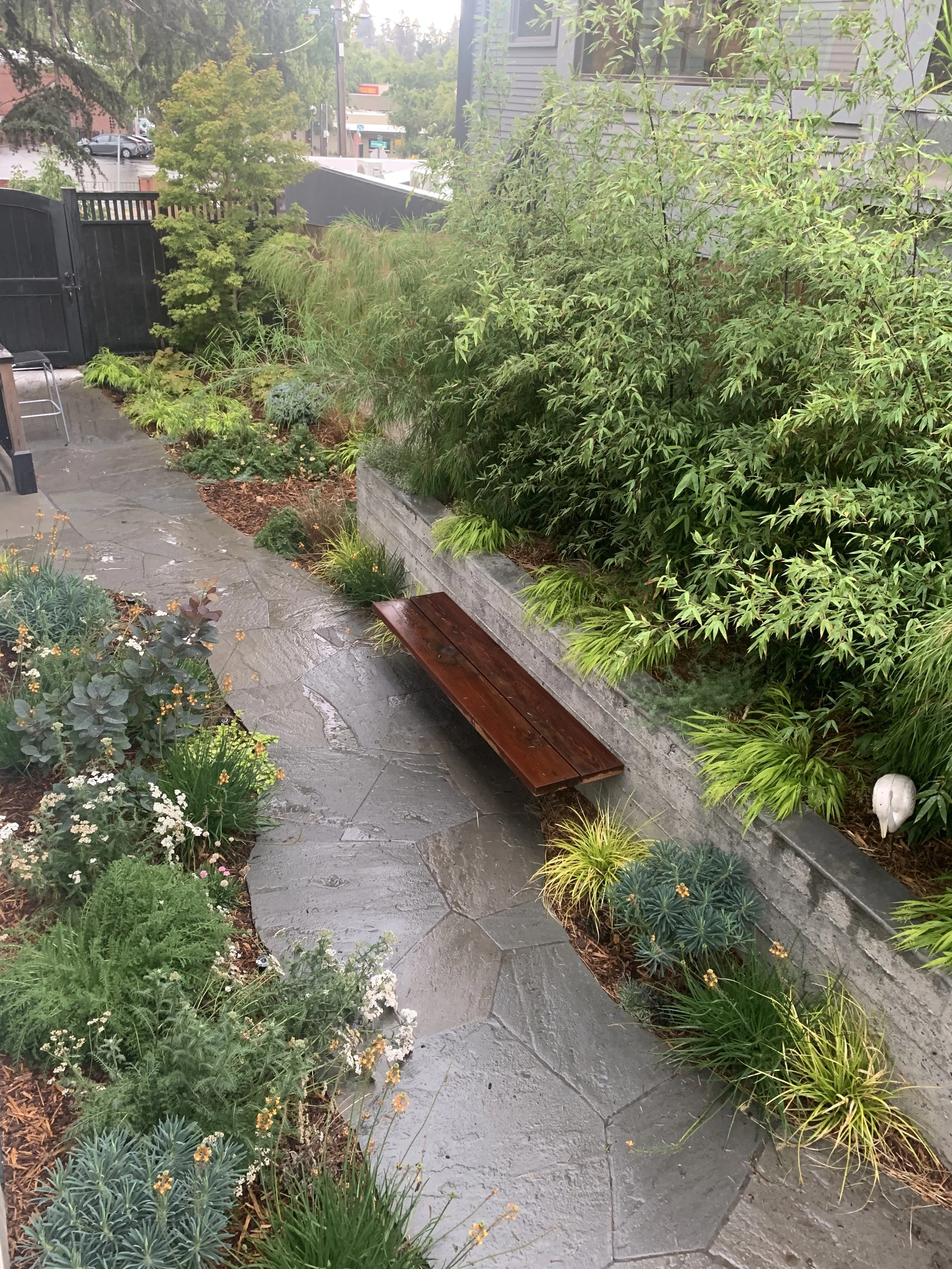
In this case, as we only have one side yard, I wanted it to be a beautiful entrance to our garden. The crappy stuff is hidden in a back a bit.

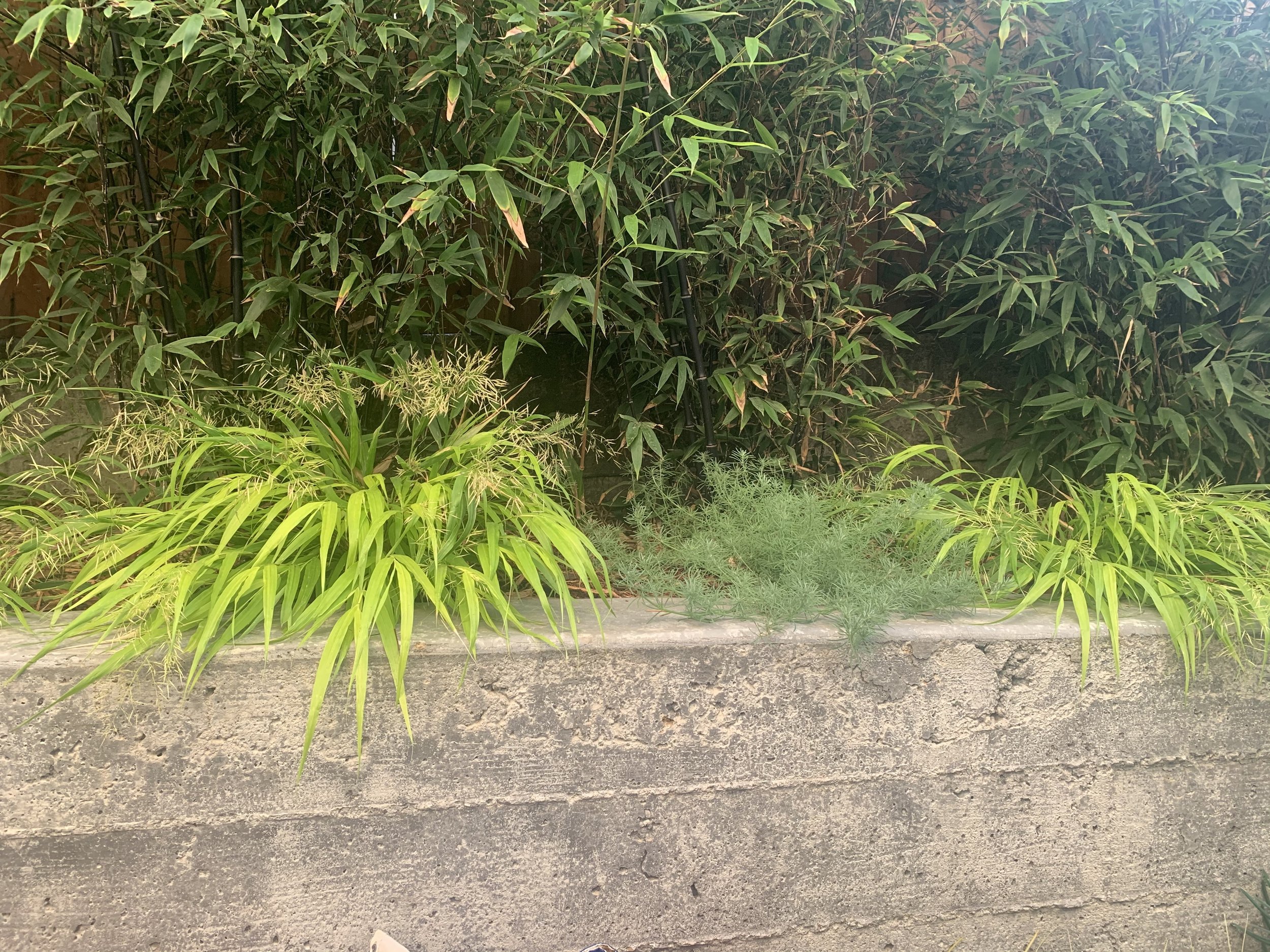
We are finding that this side yard stays nice and cool during the summer The bamboo is growing in to add shade and will hopefully screen the house from our very nice neighbor at some point. I love the way the path turned out. It is very weird to remember that this whole area was mostly underground previously and then WAS a trash area for quite a while as we did the deck construction and laundry room rebuild in the back.

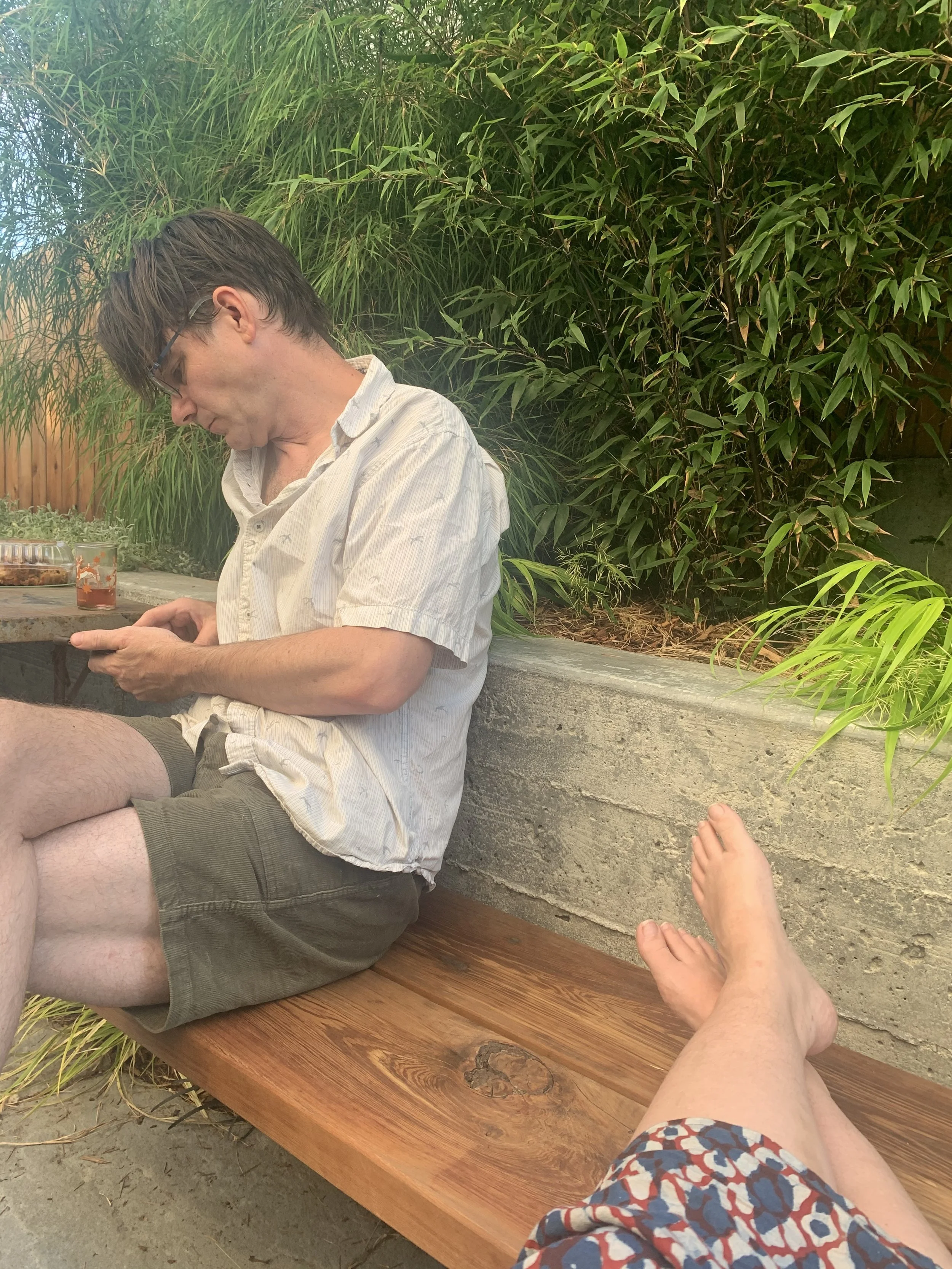
A fine and shady spot to drink a cocktail and have some snacks.

I am a tad concerned for the changing light over the seasons in this area. It is mostly full sun on one side in the summer and then in winter it really does become all shady with some morning and evening light. Originally I wanted this inch to be a live edge bench but with all the chaos and decision fatigue of construction we just went with whatever. It’s nice enough!

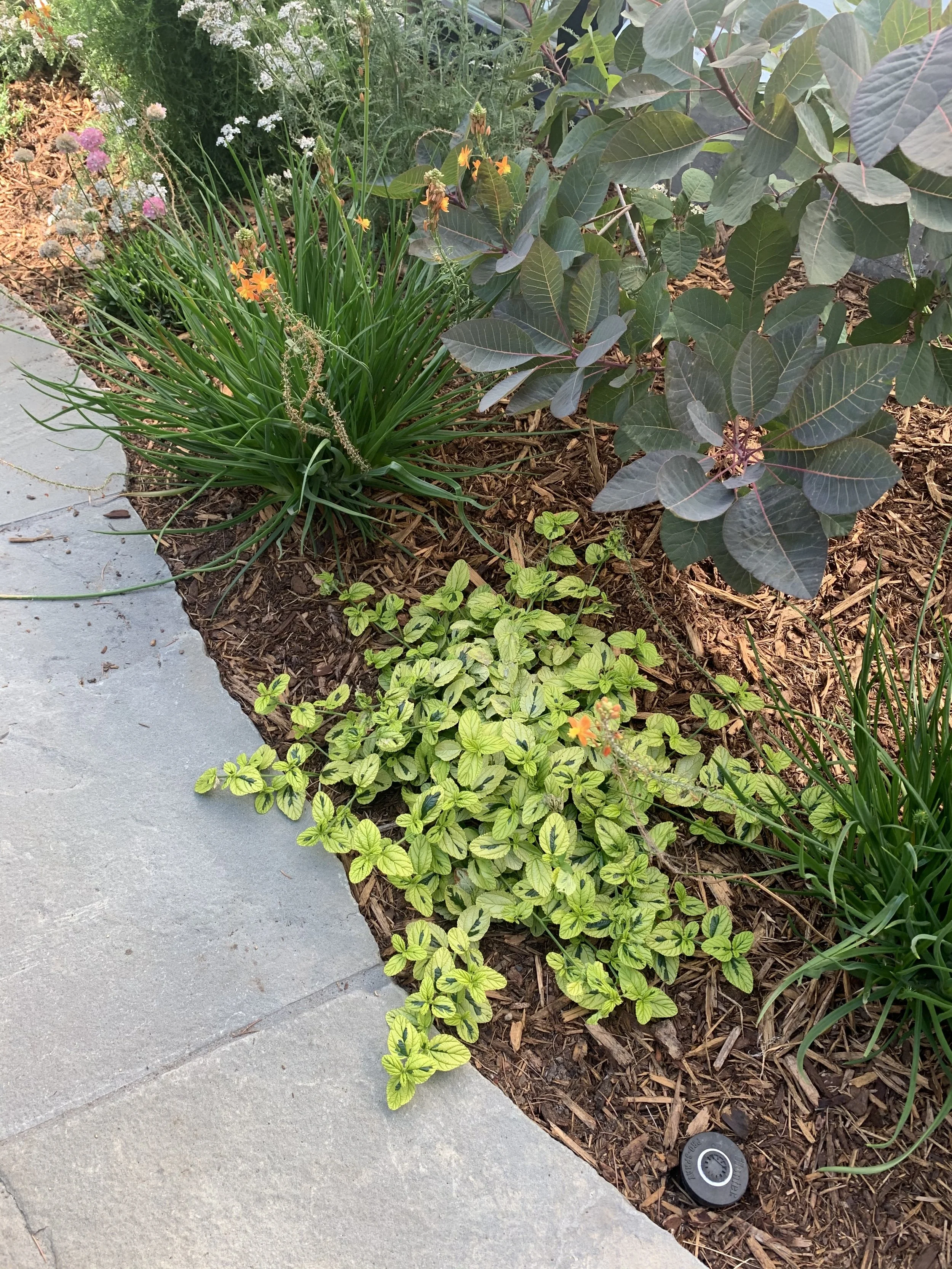
Cotinus ‘Grace’, Ceanothus ‘Diamond Heights, Bulbine ‘tiny tangerine’, Achillea and some Armeria

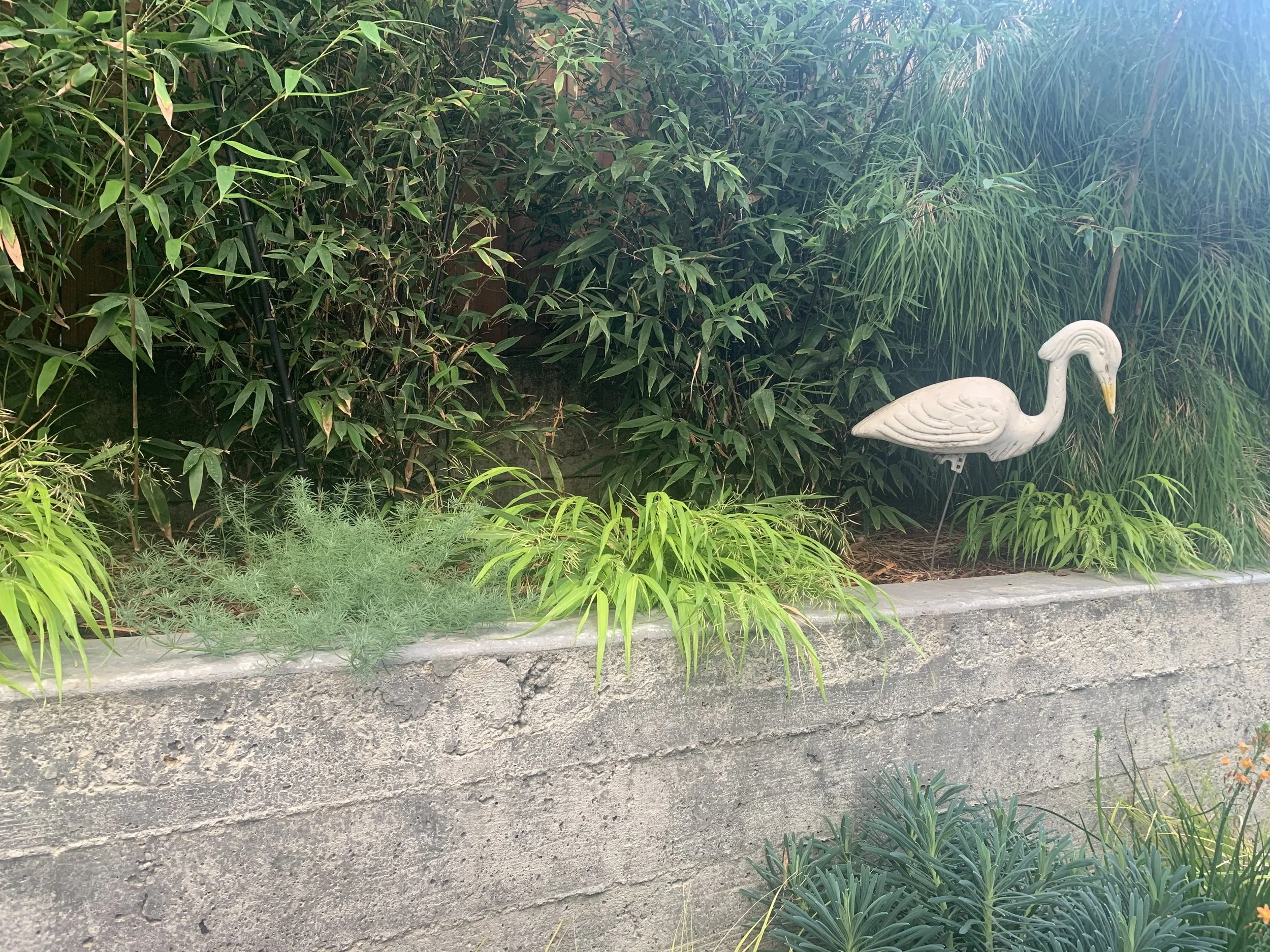
Tim got me that egret at Burning Man in 2012. As we were driving out someone had a bunch still up in their camp and he got out and asked if we could have one. I love it so!

What is a Dolly Tub?

One of the interesting things about going on garden tours in other areas is that you get to see the local trends. One thing I noticed at the APLD 2019 National conference in Seattle, WA this year was that almost every garden had Dolly Tub planters, from fancy French vintage ones, to reproductions, to plain old galvanized tubs. This is a very french garden look to my mind and I just love the PNW twist all the local designers gave their pot designs.

This one is probably vintage and fancy but couldn’t you just use a trash can? LOL. Here the pic and then my trashy interpretation.

A dolly Tub is just an old fashioned wash tub and the ‘dolly’ part was the agitator stick women used to swish the washing around. The tubs are barrel shaped to keep splashing to a minimum. Some of the old authentic ones you can see the round marks on the bottom from the dolly. Pretty cool! Here are a couple of other examples from the tour.

You can find these by just searching ‘Dolly Tub’ or ‘galvanized planter’.

Once again I am writing this way after the fact and I don't have all the names of the designers, etc. It's hard to keep pictures and notes straight while out and about on a tour. There are people everywhere, there is no where to sit, the tours are actually pretty short. like how much time do we really spend in each garden. Not to mention that fact that these tours are OVERWHELMING. It is so hard to process all this info in the moment. After the tour of a specific garden you are then hustled on to a bus and I ALREADY am a bit queasy on a large bus so I absolutely do not want to be looking at and typing on my phone on the bus.

What would be ideal organizational method be going forward?

maybe,

1. create directory in Apple Photos for each garden when you get the tour itinerary. 2. then create heading in maybe the NOTES app so that I can write up any specific quick notes I have. 3. have a small notebook to take notes in while walking around?

More APLD Tour Goodness

We did a whirlwind tour of some gardens and nurseries with Nigel Dunnett when he was here giving a present ration the Bay Area APLD district.

I would love to try this naturalistic planting design that he and Piet Oldof and such talk about but I’m not sure our clientele is the best for this technique. So, Client context matters and ongoing maintenance matters.

Our work primarily involves small to medium residential gardens NOT large scale public installations we are seeing in photos. It’s not as though our clients have dedicated gardening staff.

Who will maintain these gardens post-installation? The homeowner? A standard mow-and-blow service? I’m just not sure the more loosy-goosey evolution of a garden like this will work for say, a busy family of four.

And like, detailed written-out progression plans? idk. But my sense is that any POE visit after installing one of these at some normal Lafayette homeowner is just going to show a field of weeds and oxalis. Is this cynical of me? I’m thinking particularly of a client sending me photo of her garden a year or two after it was installed and it was all just Centranthus ruber °՞(ᗒᗣᗕ)՞°. I mean.. Centrathus is a pretty pink flower and all but NO. /rant

Back to the garden tour! This was a very fun and wild garden that you can see evolved over time and at the whims of the homeowner and designer. There were so many fun paving details like this and surprise seating moments

This is a John Greenlee project and he joined us for the tour. So it was great to have him there to talk about the gardens evolution.

A nice picture of Nigel Dunnett and John Greenlee

I love an old shed with tools moment.

the planting textures really stood out to me.

There were many ‘view moments’ where you turn a corner and suddenly you have a cool view or an interesting garden sculpture or water feature to look at. At one point I was so pleased to see one of the glassword color-changing roses made by The Sun Brother’s Studio folks! I swear I took a picture but now I can’t find it.

Some Drawings

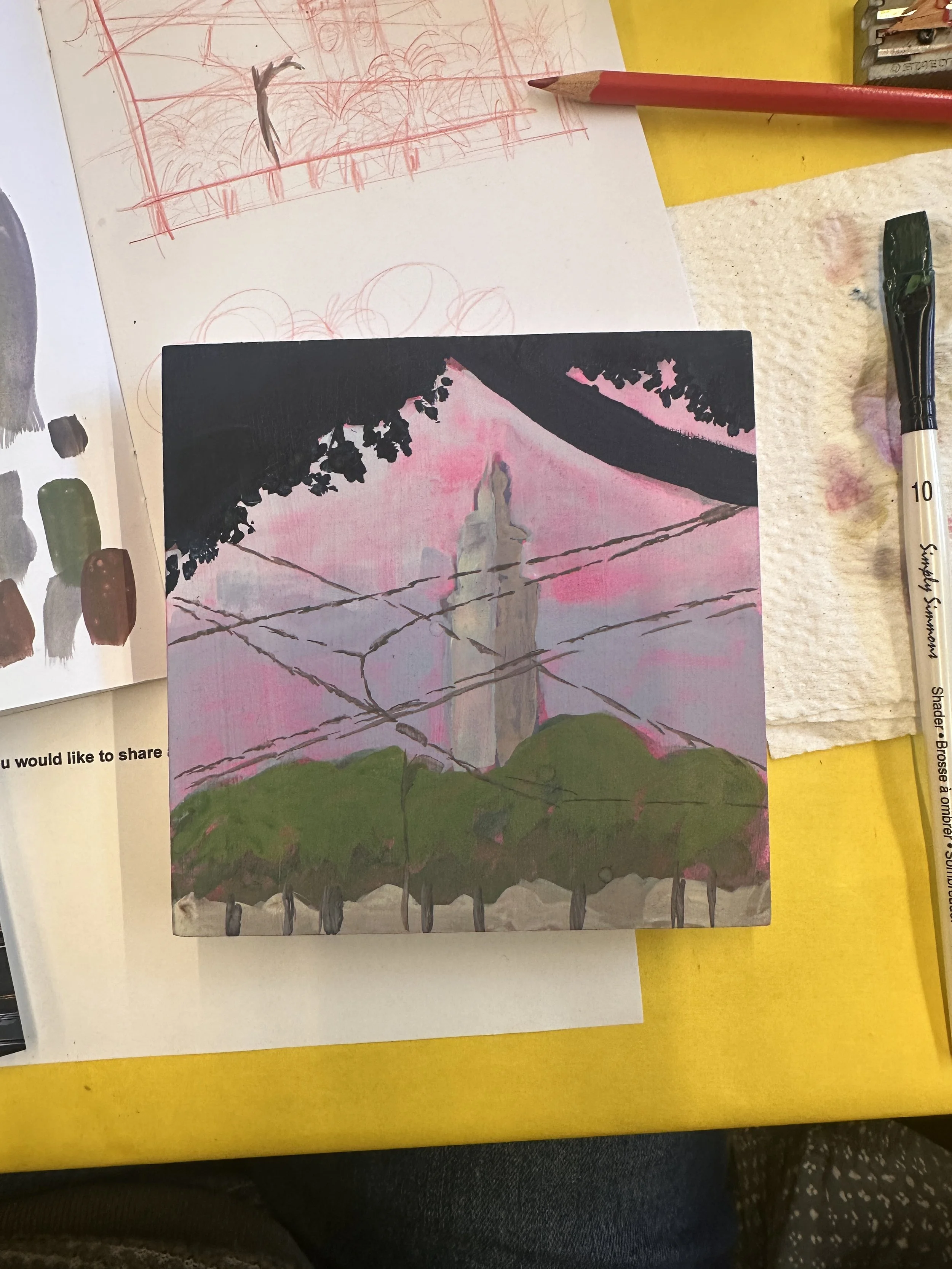
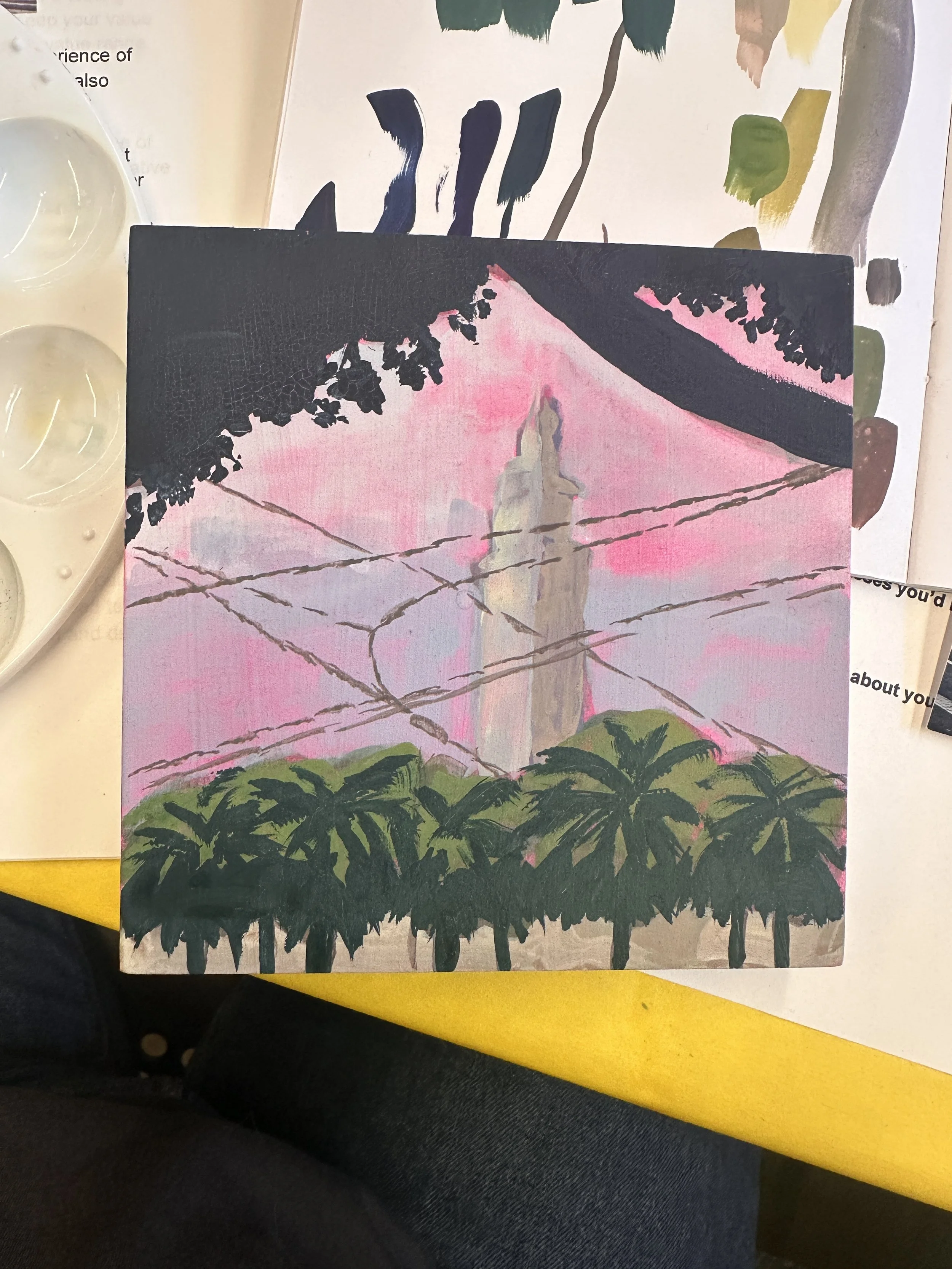
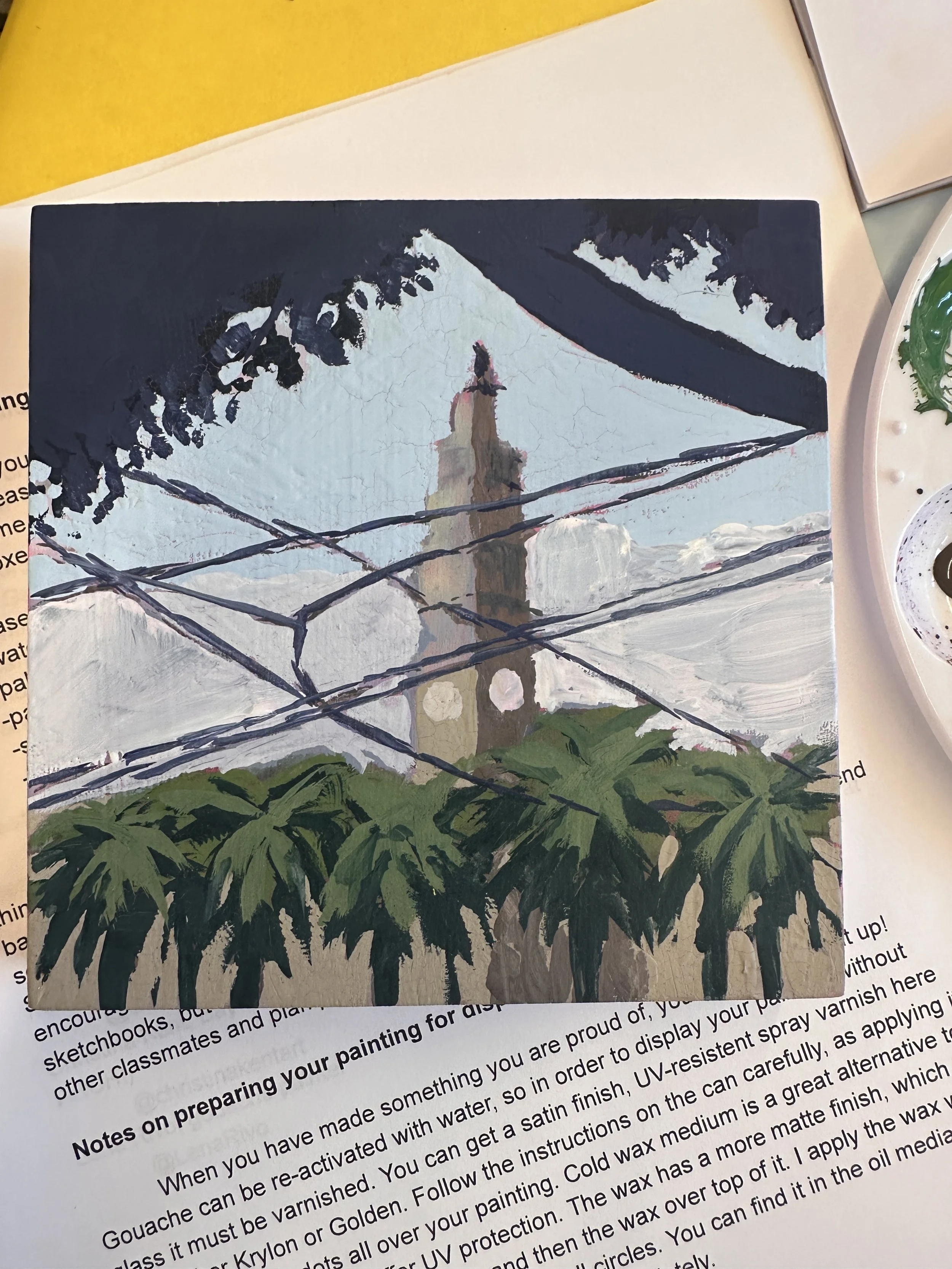
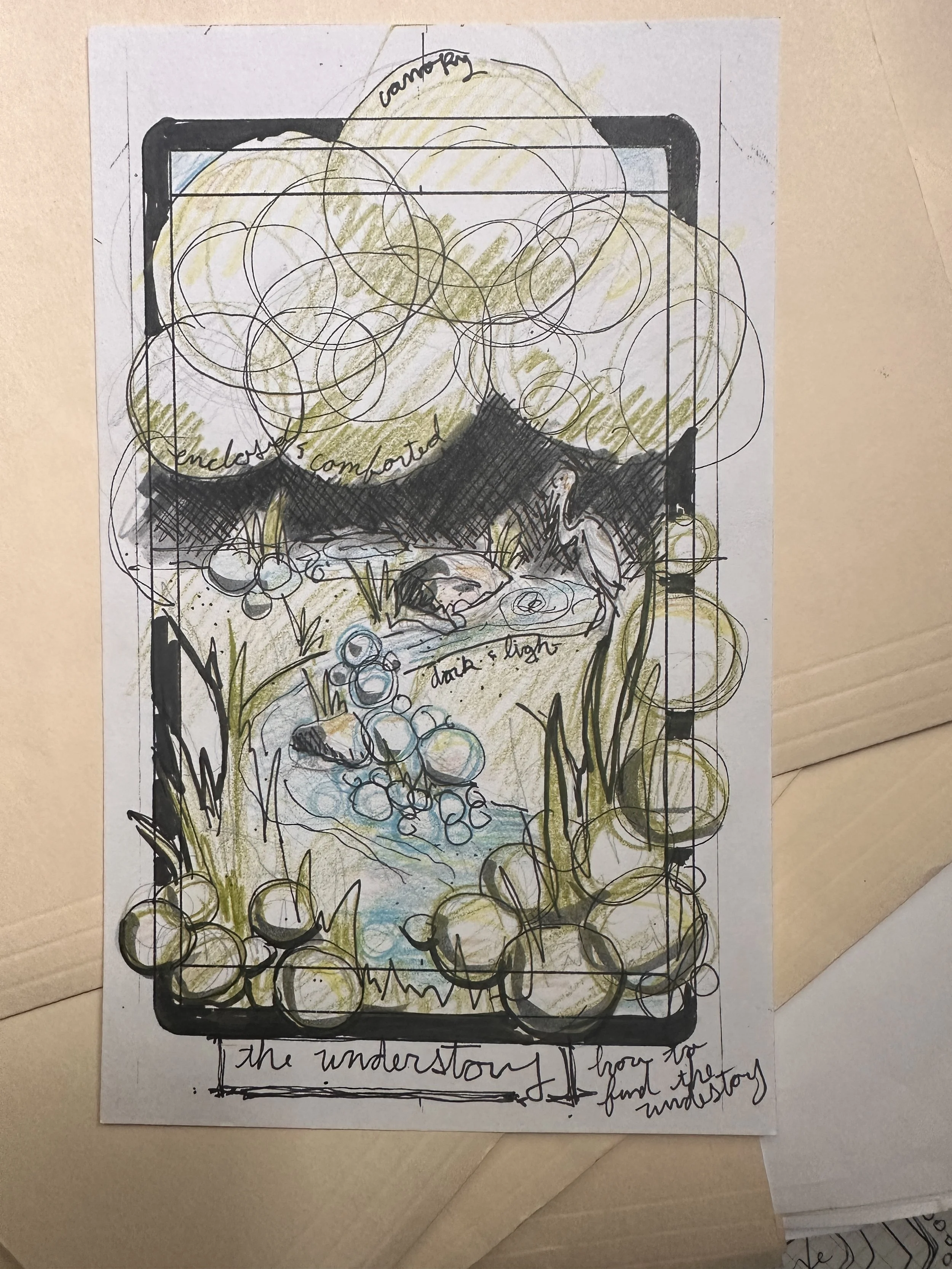
I just thought I would post some of the various painting and drawing I have been doing. Some of it is work related and some is not!

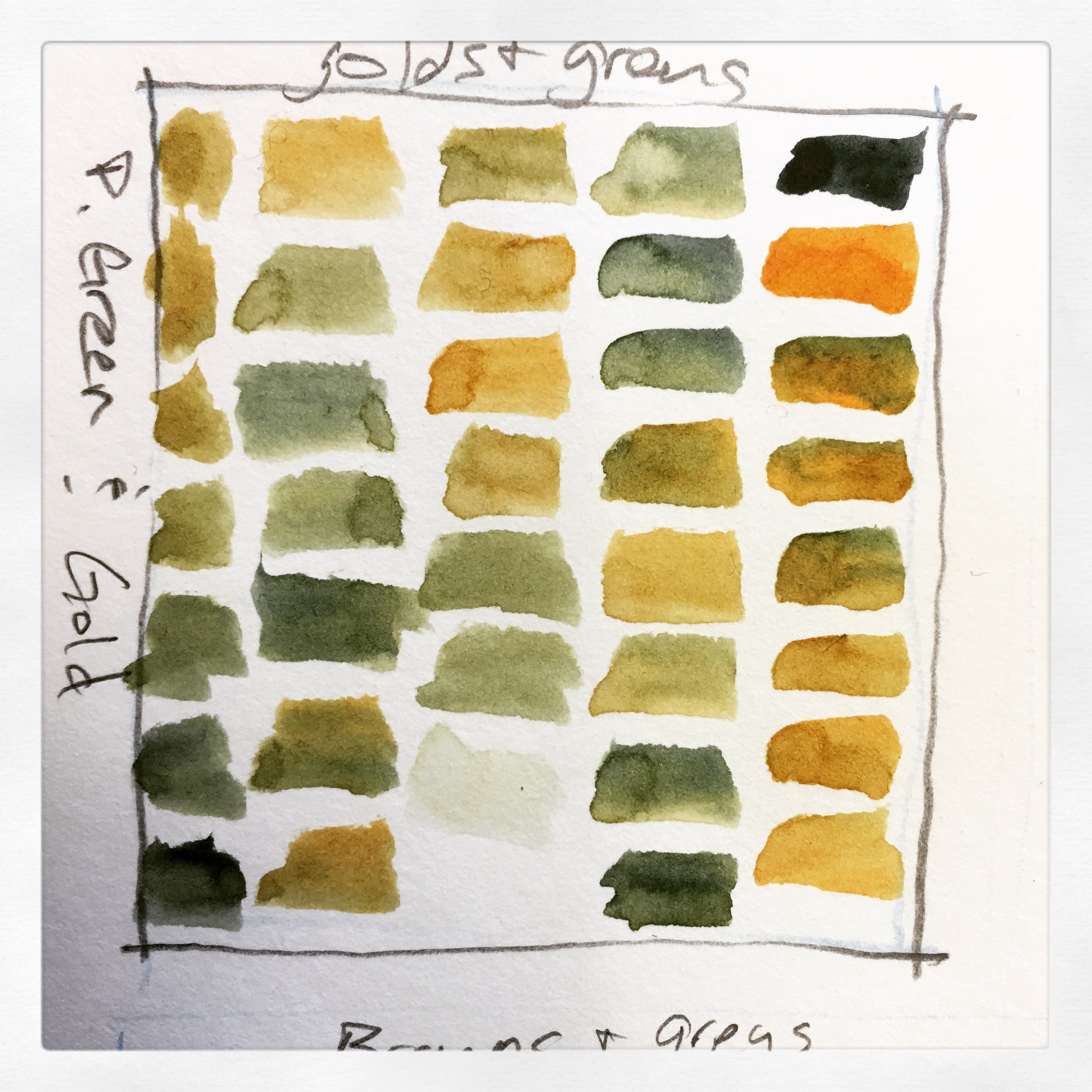
Green and gold watercolor swatches.

I did this quick visualization for a client recently. We want to remove this lawn, a little privacy fence (not too overwhelming) and some interesting colorful plants.

Okay, so I also took this irrigation class through the Zone 7 Water Agency. the class was taught by Lori Palmquist, who is an irrigation WIZARD. She’s a good speaker and a good teacher. I may also have accosted her about some APLD stuff and she was like WhoTF are you?!? LOL. No worries, Lady, I’m just a stranger asking you for access to this website you used to work on. Don’t mind me! Anyway, here is an illustration of an irrigation manifold. As you can see, I am an excellent student who does not struggle to pay attention.

I should be learning about what these things are and do but instead I am drawing them. Don’t come at me, I have ADHD.

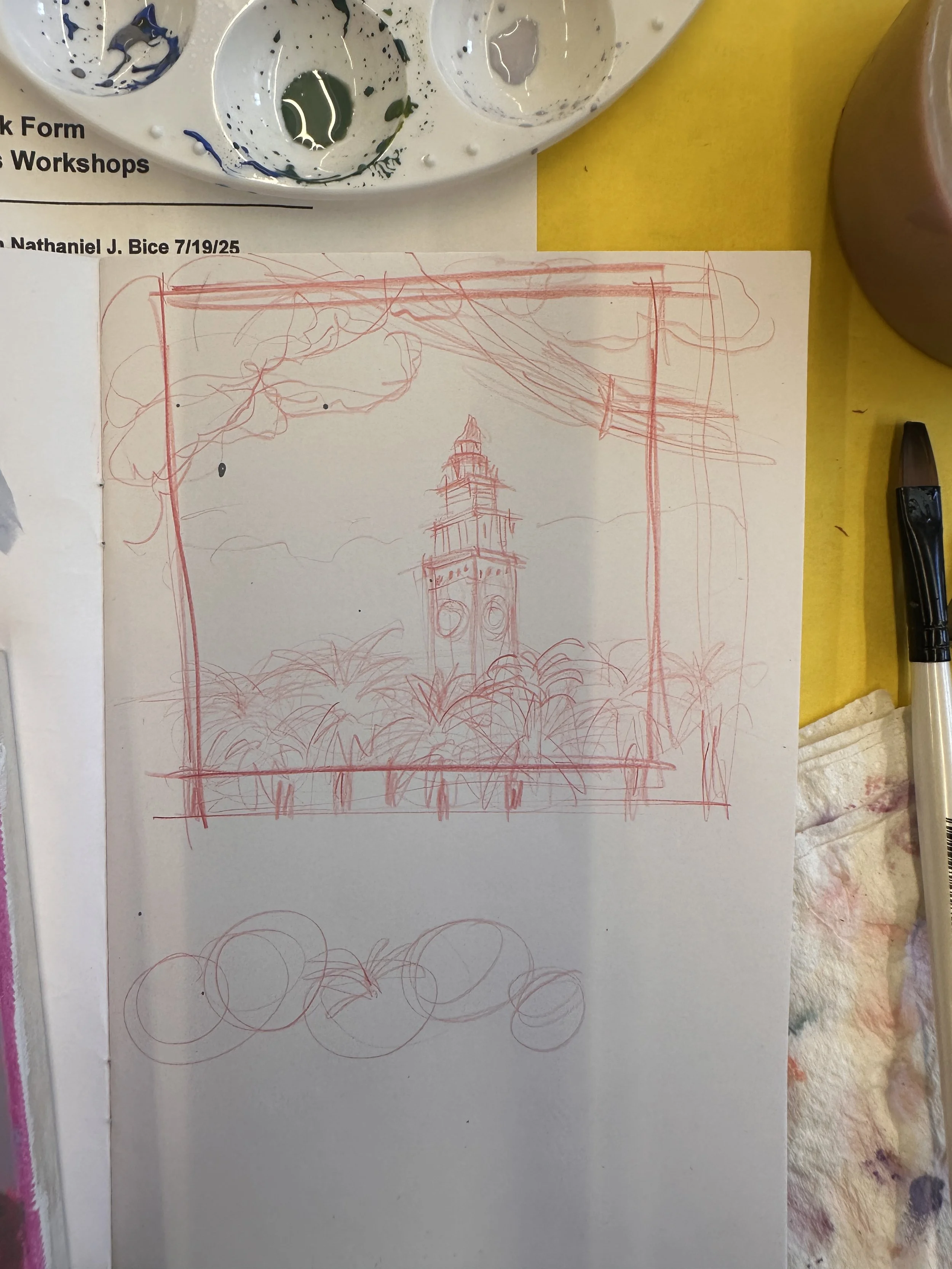
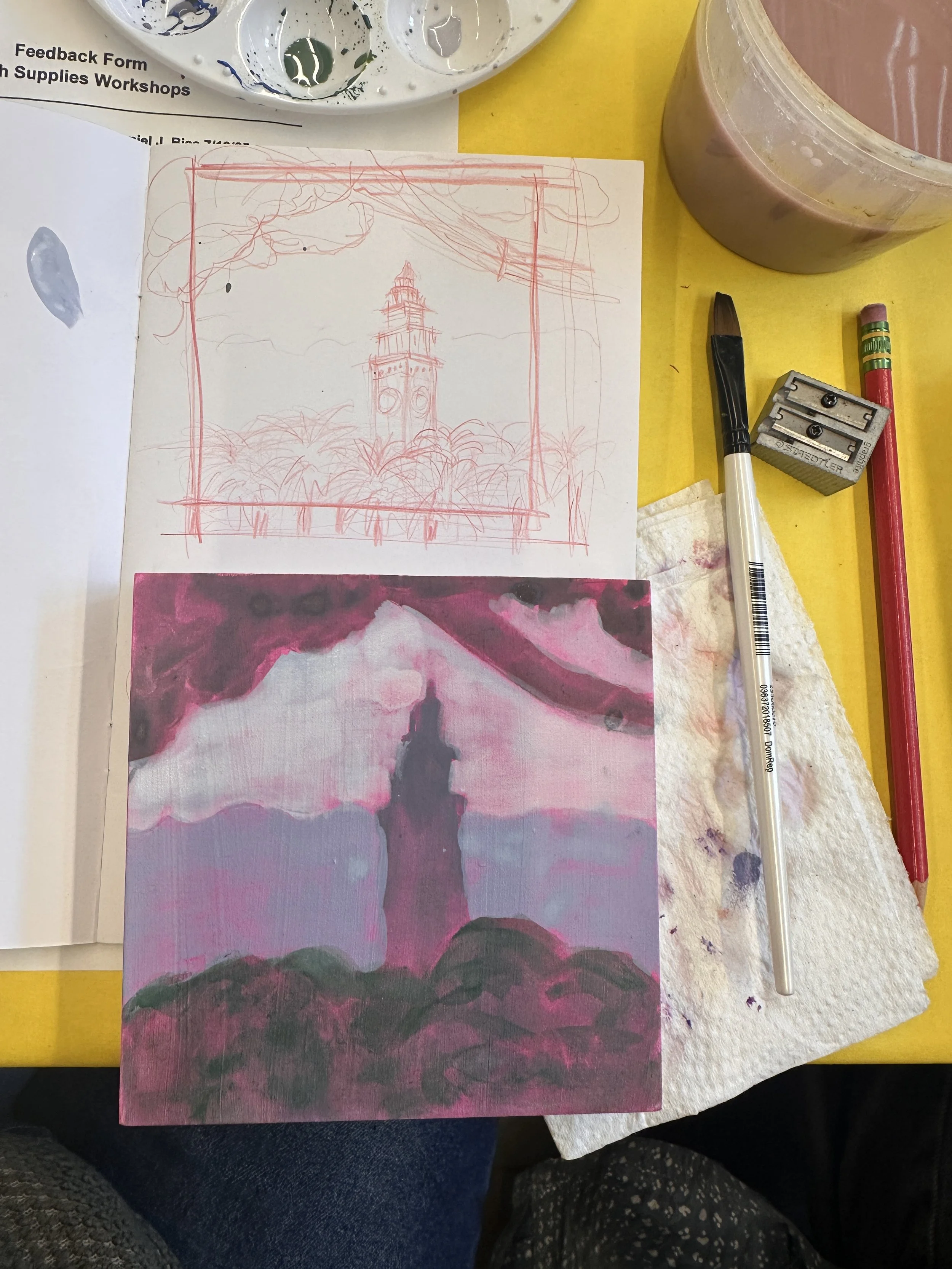
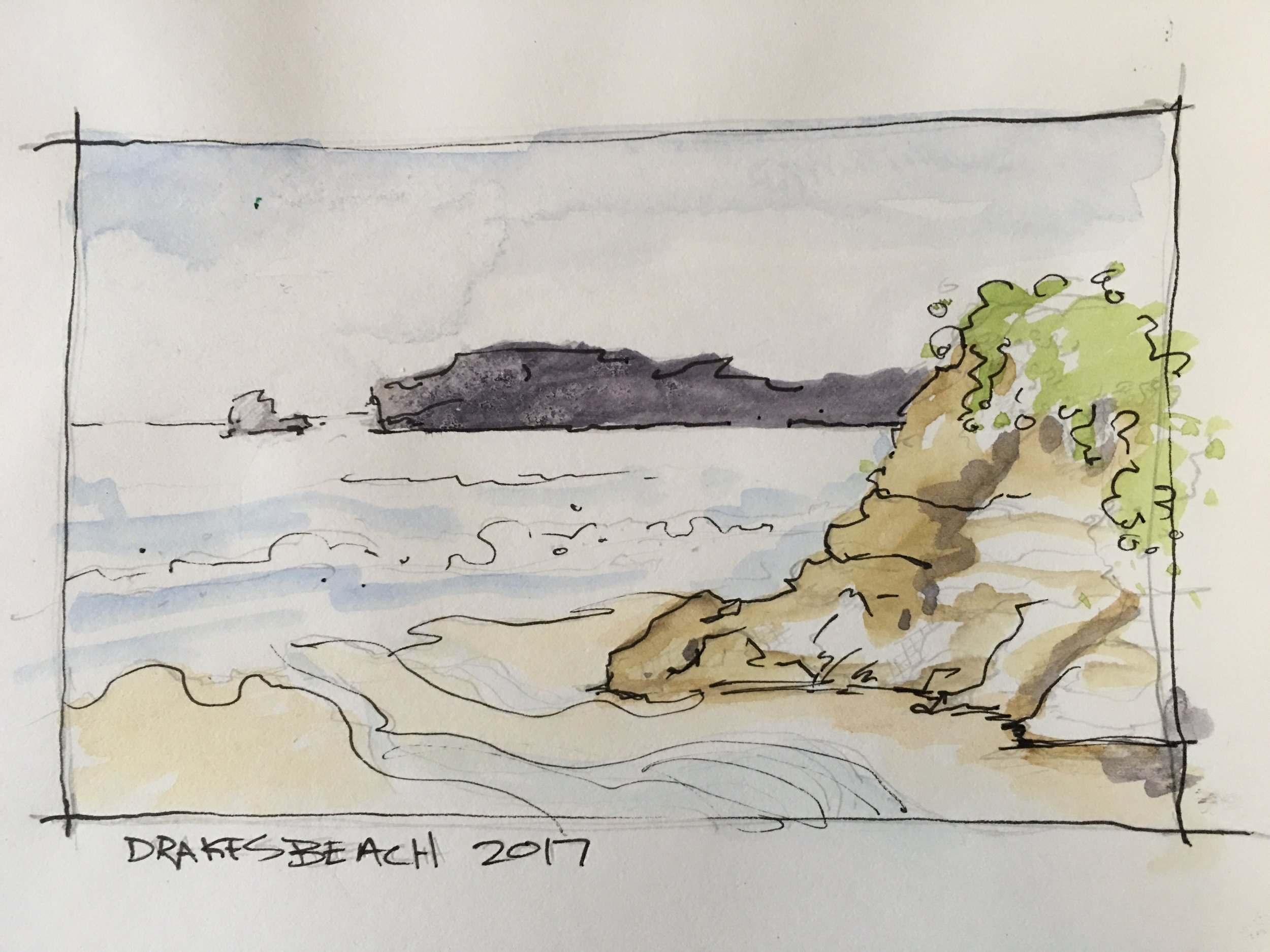
We had a little field trip to Drake’s Beach and I did a quick vignette.

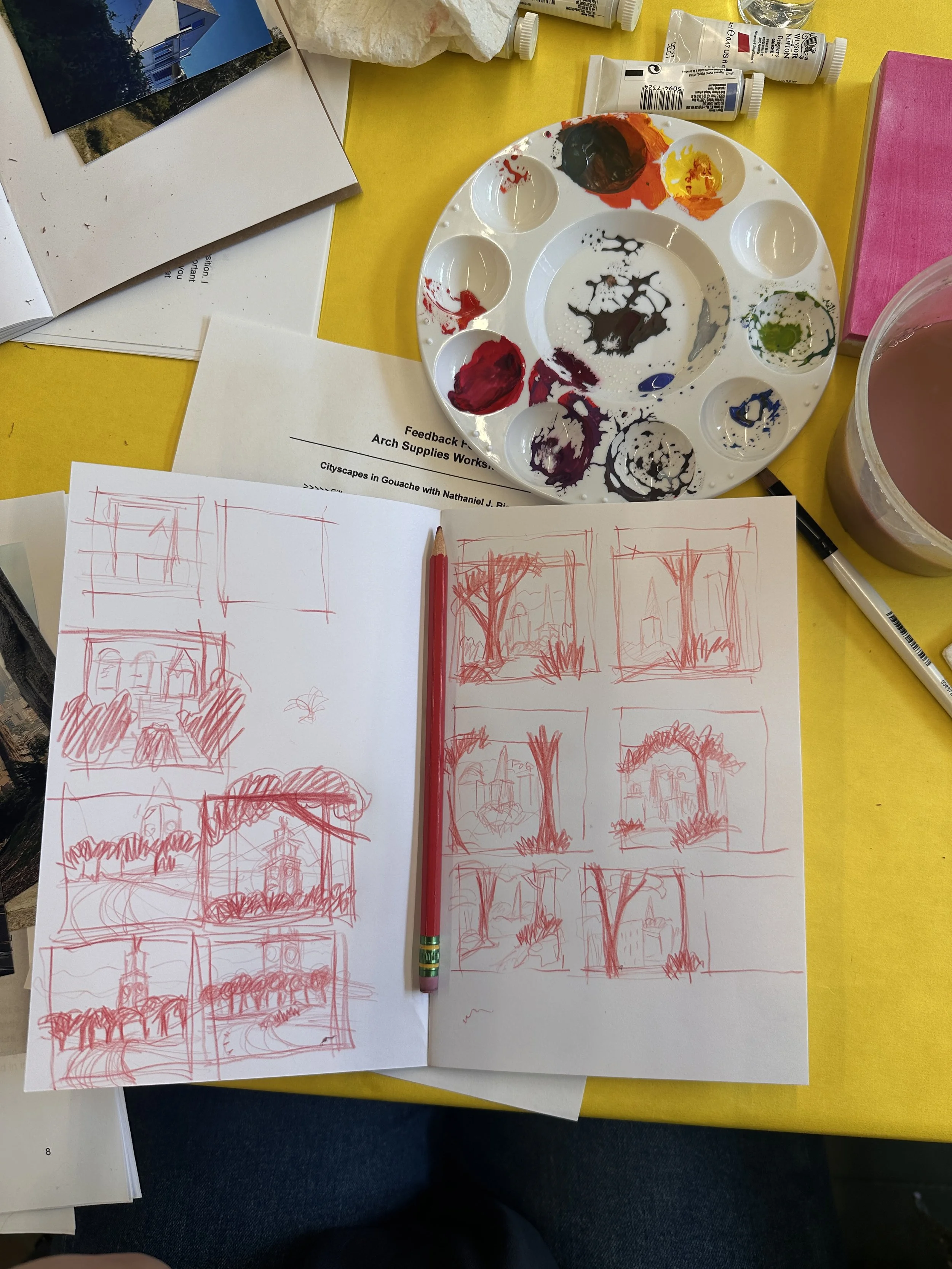
Some other sketchy doodles for work: